
Application of membrane filtration technology in mRNA vaccine production
Application of membrane filtration technology in mRNA vaccine production
Background introduction
After more than 30 years of research, mRNA vaccines are attracting great attention at a time when the COVID-19 pandemic is raging around the world. As a new vaccine technology, mRNA vaccine has the advantages of short research and development cycle, low cost, wide range of antigen selection and good protection effect. Compared with traditional subunit vaccines and inactivated vaccines, mRNA vaccine has great potential and has become a dark horse in the field of biological medicine, which may bring subversive changes to the field of biological medicine.
mRNA
Messenger RNA (mRNA) is a type of single-stranded ribonucleic acid that is transcribed from a strand of DNA as a template and carries genetic information that can guide protein synthesis. After transcriptional generation of mRNA according to the principle of complementary base pairing based on genes in cells, mRNA contains base sequences corresponding to some functional segments of DNA molecules, which is used as a direct template for protein biosynthesis. Although mRNA only accounts for 2% to 5% of the total RNA of the cell, it is the most diverse, and the metabolism is very active, and it is a kind of RNA with the shortest half-life, which decomposed in a few minutes to a few hours after synthesis.
mRNA vaccine
mRNA is a naturally occurring molecule that carries the "blueprint" of human cells to produce target proteins, or immunogens, that activate immune responses in the body to fight a variety of pathogens. mRNA vaccines use the genetic sequence of the virus rather than the virus itself, so mRNA vaccines have no viral components and no risk of infection. At the same time, mRNA vaccines also have a short research and development cycle, which can rapidly develop new candidate vaccines to deal with virus variation. The dual mechanism of humoral and T cell immunity, strong immunogenicity, no need for adjuvants, and ease of mass production support the key advantages of global supply. mRNA vaccine is a new type of nucleic acid vaccine, which belongs to the third generation vaccine. Compared with traditional vaccines, mRNA vaccines are similar to viral infections, and by injecting according to the guidance of professional doctors, they can synthesize the S protein in the human body, and then stimulate the body to produce antibodies by simulating viral infection. mRNA vaccine has the advantages of fast intracellular expression, fast response, strong immunogenicity, high efficacy and safety, short research and development cycle, and easy large-scale production. In the past few years, a variety of mRNA vaccines for rabies, influenza and other infectious diseases have entered clinical trials and shown good application prospects. During the COVID-19 epidemic, the successful application of mRNA vaccines further validated the platform and opened the floodgates for the application of mRNA vaccines in infectious disease prevention, especially in the field of veterinary medicine.
mRNA vaccine production process
The sudden onset of COVID-19 at the end of 2019 changed the landscape of the biomedical industry. mRNA vaccine technology has been explored and also due to the continued efforts by scientists over the past 30 years, making it possible to apply it to humans. Virus is a highly variable pathogen, and mRNA-based vaccine technology can rapidly modify the target protein and achieve rapid and large-scale production, which has a positive effect on the prevention of viral disease infection. COVID-19 has opened the door to mRNA-based vaccines and mRNA vaccine prevention approaches for other major diseases, and the impact and significance of promoting mRNA-based vaccine technologies could extend far beyond COVID-19 prevention itself.
In recent years, mRNA vaccines have made great progress, and the application technology in the prevention and treatment of a variety of tumors and infectious diseases has gradually developed and matured, and a variety of mRNA vaccines have entered clinical trials. However, as a new vaccine development technology, mRNA vaccine still faces some problems and challenges in the research and development, and there are still many problems to be overcome in the process development. To truly realize mRNA therapy for patients, we need to constantly identify problems, find problems, and solve problems.
At present, the production process of mRNA vaccine is complicated and cumbersome, but membrane filtration technology runs through the entire production process of mRNA vaccine.
Membrane filtration technique
Membrane filtration technology refers to the membrane separation technology driven by pressure. Under a certain pressure, when the liquid flows through the surface of the film, many small pores on the surface of the film only allow water and small molecules to pass through and become the permeating liquid, and the substance in the liquid whose volume is larger than the microaperture on the surface of the film is trapped in the liquid inlet side of the film, becoming the concentrated liquid, so as to achieve the purpose of separating and concentrating the liquid. Membrane filtration, as a new high-efficiency separation, concentration, purification and purification technology, has the advantages of simple operation, small floor space, no phase change and no new polluting substances in the treatment process, good separation effect, etc., has developed rapidly in the past 30 years, and has been widely used in petrochemical, light industry textile, food, medicine, environmental protection and other fields.
Application of membrane filtration technology in mRNA vaccine production
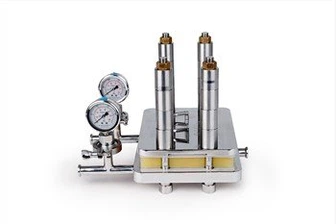
In different production stages of mRNA vaccines, different tangential flow filtration forms and membrane filtration products should be used due to different products, impurities and experimental purposes.
(1) LNP ultrafiltration purification/concentration
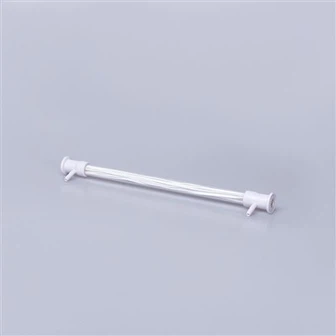
After the mRNA is combined with a positively charged material (microfluidic packed LNP), ultrafiltration purification/concentration process is required. In the process of mRNA vaccine production, membrane envelope or hollow fiber with appropriate aperture can be selected according to the particle size of the mRNA-LNP complex to remove uncombined mRNA and free lipids, increase the concentration of the mRNA-LNP complex, replace the buffer, adjust the pH value, etc.
(2) sterilization and filtration
The bactericidal filtration process is the production process of obtaining sterile filtrate by removing microorganisms in the fluid through the bactericidal filter. The process of bactericidal filtration shall not adversely affect the quality of the product. In the production process of mRNA vaccines, a filter with a pore size of 0.22μm is generally used to remove microbial contaminants such as bacteria and improve the safety of mRNA vaccines.
About Guidling
Guidling Technology is a national high-tech enterprise focusing on biopharmaceuticals, cell culture, purification and concentration of biomedicine, diagnosis and industrial fluids. We have successfully developed centrifugal filter devices, ultrafiltration & microfiltration cassettes, virus filter, TFF system, depth filter, hollow fiber, etc. Which fully meet the application scenarios of biopharmaceuticals, cell culture, and so on. Our membranes and membrane filters are widely used in concentration, extraction and separation of pre-filtration, microfiltration, ultrafiltration and nanofiltration. Our many product lines, from small, single-use laboratory filtration to production filtration systems, sterility testing, fermentation, cell culture and more, meet the needs of testing and production. Guidling Technology is looking forward to cooperating with you!