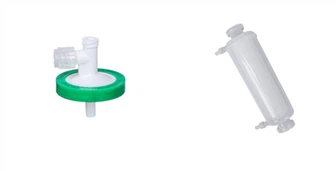

Application of Ultrafiltration in Natural Collagen Extraction
Collagen, as a natural protein resource, has good biocompatibility, low antigenicity, biodegradability and hemostasis, its tight helical structure and its own characteristics, all of which provide prerequisites for its industrialization. Collagen and its by-products are not only used as packaging materials, cosmetics and health care products, but also as food additives to improve the meat product, and it plays an important role, especially in the medical field.
What is Collagen?
Collagen is a biological macromolecule, the main component of animal connective tissue, and the most abundant and widely distributed functional protein in mammals, accounting for 25% to 30% of total protein, and even up to 80% or more in some organisms. It plays the role of binding tissue in animal cells.
It is measured that an adult's body has about 3kg collagen, which mainly exists in human skin, bones, eyes, teeth, tendons, internal organs (including heart, stomach, intestines, blood vessels) and other parts of the human body, and its function is to maintain the morphology and structure of the skin and tissues and organs, and it is also an important raw material for the repair of various tissues after injury.


There are many types of collagen protein, and the common types are type I, type II, type III, type V and XI. Because of its good biocompatibility, biodegradability and bioactivity, collagen has been widely used in food, medicine, tissue engineering, cosmetics and other fields.
How to extract natural collagen
Animal tissues from livestock and poultry are the main way for people to obtain natural collagen and its collagen peptides. However, due to related animal diseases and certain religious beliefs, people's use of collagen and its products from land mammals is limited, and the development is gradually turning to Marine organisms. The European Food Safety Authority (EFSA) has confirmed that even collagen derived from animal bones does not have the potential to infect mad cow disease and other related diseases. Due to differences in amino acid composition and crosslinking degree, aquatic animals, especially the collagen rich in their processing wastes such as skin, bone and scale, have many advantages that livestock collagen does not have. In addition, collagen derived from Marine animals is obviously superior to collagen from land animals in some aspects, such as low antigenicity and hypoallergenicity. Therefore, aquatic collagen may gradually replace terrestrial animal collagen. The process of extracting collagen from grass carp fish scales was taken as an example.
Extraction of collagen from grass carp fish scales by ultrafiltration method
1. Materials and methods
1.1 Test sample
Crude collagen aqueous extract.
1.2 Test methods
1.2.1 Ultrafiltration process route

1.2.2 Pre-filtration process determination
In this test, the vacuum filtration method and microfiltration method are compared and analyzed to determine the best pre-filtration filtration process. The specific test methods are as follows:
① The crude collagen water extract was filtered by vacuum pumping of filter paper to remove suspended particles and impurities in the water extract.
② The crude collagen water extract was filtered by 0.2μm microfiltration membrane to remove insoluble matter and impurities in the water extract.
1.2.3 Selection of ultrafiltration membrane pore size
The pore size of ultrafiltration membrane was 100 kDa.
1.2.4 Single factor experiment of ultrafiltration purification process
Ultrafiltration technology was used to purify crude collagen water extract, and single-factor experiments on the effects of operating pressure, operating temperature and pH value on collagen retention were studied. After the ultrafiltration equipment was started for a period of time and stabilized, the influence of various factors on collagen retention was studied.
1.2.5 Calculation Formula

2. Results and analysis
2.1 Analysis results of pre-filtration process
The comparison results of the two filtration methods of vacuum extraction and microfiltration are shown in the following table.

It can be seen from the table that both vacuum filtration method and microfiltration method can remove impurities and insoluble solids in the solution, but microfiltration method has a better protective effect on proteins, that is, the loss is not obvious, and vacuum filtration method is easy to cause loss of proteins. In addition, the vacuum filtration method appears turbidity after the filtrate is placed for a period of time, and the microfiltrate is still clear and transparent, so microfiltration is chosen as the pre-treatment process of ultrafiltration.
2.2 Single factor test of ultrafiltration process
2.2.1 Influence of ultrafiltration pressure on retention rate
Under the condition of temperature 40℃ and pH=9.0, the influence of different ultrafiltration pressures (0.07MPa, 0.09MPa, 0.11MPa, 0.13MPa and 0.15MPa) on protein retention was studied. The results are shown in the figure below.
 |
As can be seen from the figure above, with the increase of the operating pressure, the protein retention rate gradually decreases. When the operating pressure is 0.07MPa, the protein retention rate is 96.53%, and when the operating pressure is 0.15MPa, the protein retention rate is 84.38%. This is because the separation effect of ultrafiltration on substances is carried out by the pressure difference. In the range of low operating pressure, small molecules can quickly pass through the membrane, while large molecules can be trapped by the ultrafiltration membrane and accumulate on the membrane surface. At this time, the membrane surface and the water extract form a concentration difference, resulting in the concentration polarization resistance. At this time, the pressure is relatively low, and can not have a great impact on the retention rate. However, with the increase of pressure, the concentration polarization resistance gradually increases, and the concentration difference between the membrane surface and the water extract reaches equilibrium. When the pressure exceeds this equilibrium, a gel layer can be formed on the membrane surface (which is consistent with the theory that concentration polarization and condensation layer are formed during ultrafiltration), and the pressure continues to increase, the thickness of the gel layer increases, and the protein remaining on the membrane surface increases too. This results in a lower retention rate. In order to ensure the separation effect of the membrane, the optimal parameter of operating pressure is 0.07MPa.
2.2.2 Influence of temperature on protein retention
Under the conditions of 0.11MPa pressure and pH=9.0, the effects of different temperatures, namely 25℃, 30℃, 35℃, 40℃ and 45℃, on protein retention were studied. The results are shown in the figure below.

As can be seen from the figure above, the retention rate of ultrafiltration membrane gradually increases with the increase of temperature, and reaches the maximum at 45℃, with a retention rate of 97.01%. This is because the viscosity of collagen is closely related to temperature. When the temperature is low, the viscosity of collagen is larger, and the accumulation of collagen on the membrane surface is easy to form resistance, resulting in low retention rate. When the temperature increases, the viscosity of collagen decreases, the interaction between collagen molecules is weakened, and the mass transfer rate increases, the concentration polarization phenomenon is weakened, and the retention rate increases. Another reason for the increase of the retention rate is that the temperature increases, the solubility of collagen also increases correspondingly, and the phenomenon of collagen blocking the membrane is reduced, so the optimal temperature of ultrafiltration is 45℃.
2.2.3 Influence of pH value on protein retention
Under the conditions of 0.11MPa pressure and 40℃ temperature, the influence of different pH conditions, namely pH=6.0, pH=7.0, pH=8.0, pH=9.0 and pH=10.0, on the retention rate was studied. The results are shown in the figure below.
 |
As can be seen from the figure above, in the range of pH 6-7, the protein retention rate decreases with the increase of pH value, and the minimum value is 82.13% when pH=7.0; when pH>7, the retention rate gradually increases with the increase of pH value. This is because the isoelectric point of collagen is pH=7. At the isoelectric point, the protein is in a state of precipitation, which is easy to stay on the surface of the membrane and block the membrane, thus reducing the retention rate. When pH>7, the retention rate gradually increases with the increase of pH value. This is because the ultrafiltration membrane is polyether maple membrane with negative charge, and collagen is negatively charged under alkaline conditions. The negatively charged collagen molecules form a mutually exclusive state with the ultrafiltration membrane with the same charge, thus collagen molecules are not easy to stay on the surface of the membrane and block the membrane. Therefore, the optimal pH value of ultrafiltration is 8-10.
2.3 Ultrafiltration process optimization and result verification
According to the analysis of Design-Expert8.05 software, the optimal process parameters are: operating pressure 0.14MPa, operating temperature 40.98℃, solution pH=9.43, and the retention rate is 92.551%. Considering the operability of the actual parameters, the ultrafiltration conditions were selected as 0.14MPa operating pressure, 40℃ operating temperature and 9.50 pH value of the material solution, and the test verification was started after the ultrafiltration system was started and stabilized. The result of the retention rate was (92.61±0.1) % (n=3). The predicted values of the equation are basically similar to the measured values, which shows that the predicted condition parameter results are in agreement with the actual condition results.
2.4 Electrophoretic analysis results
The purified collagen was analyzed by SDS-PAGE electrophoresis, and the results were shown in the following figure.

As can be seen from the figure above, lane 1 is the purified collagen of this test, and lane 2 is the standard collagen sample of calf tendon. It can be seen from SDS-PAGE electrophoresis that the collagen in this study can be identified as collagen, but the boundaries between a1 peptide chain and a2 peptide chain seem to be not clear. It can be seen from the electrophoretic map that there is no other protein impurity, so it can be concluded that the purified collagen is high in purity.
About Guidling
Guidling Technology is a national high-tech enterprise focusing on biopharmaceuticals, cell culture, purification and concentration of biomedicine, diagnosis and industrial fluids. We have successfully developed centrifugal filter devices, ultrafiltration & microfiltration cassettes, virus filter, TFF system, depth filter, hollow fiber, etc. Which fully meet the application scenarios of biopharmaceuticals, cell culture, and so on. Our membranes and membrane filters are widely used in concentration, extraction and separation of pre-filtration, microfiltration, ultrafiltration and nanofiltration. Our many product lines, from small, single-use laboratory filtration to production filtration systems, sterility testing, fermentation, cell culture and more, meet the needs of testing and production. Guidling Technology is looking forward to cooperating with you!