
Study On The Replacement Of Traditional Column Chromatography With Membrane Chromatography For Monoclonal Antibody Purification
traditional packed-bed chromatography is mature and reliable, but it is constrained by limitations such as low diffusion efficiency, high backpressure, and slow processing speeds, making it increasingly difficult to keep pace with the continuously increasing productivity of upstream processes. Recently, a study published in Biotechnology Progress has brought a potential breakthrough to the industry: with its advantages of exceptionally high productivity and robust durability, membrane chromatography may become an effective alternative to packed-bed chromatography and fundamentally reshape the landscape of downstream mAb purification.
Research Background
The study systematically evaluated various types of membrane chromatography devices, including ion-exchange and Protein A affinity membranes, and conducted a comprehensive comparison with traditional packed-bed chromatography across multiple dimensions, including binding capacity, impurity clearance, service life, and overall purification performance. Three recombinant proteins were selected for the study-one monoclonal antibody (mAb) and two Fc-fusion proteins-covering the complete downstream purification process from capture to polishing. The key test results are as follows:
1. Capture Step: Protein A Membrane Chromatography - High Binding Capacity at Short Residence Times
Protein A chromatography is a critical step in mAb capture. The study evaluated the performance of four Protein A membranes (three commercial products and one prototype membrane) against two reference packed-bed resins:
- Outstanding dynamic binding capacity (DBC): Two membranes achieved DBC values exceeding 50 g/L. Some membranes maintained binding capacities of 35–65 g/L even at an extremely short residence time of 0.2 min, comparable to traditional packed-bed resins (37–55 g/L).
- Dramatic increase in productivity: The residence time of membrane chromatography was only 1/6–1/30 that of traditional column chromatography (0.13–0.33 min vs. 2–6 min), resulting in a 12–35-fold increase in batch processing productivity.
- Stable recovery: Protein recovery exceeded 85% for all membrane devices. The GORE membrane achieved the highest recovery of 96%, essentially comparable to traditional packed-bed resins (94–98%).
- Limitations to consider: Membrane chromatography produced an elution volume 1.4–5 times higher than traditional packed-bed resins, while HCP clearance was slightly inferior. For some membranes, HCP levels in the eluate reached 7,000 ppm, compared with 4,700 ppm for traditional packed-bed resins. Therefore, additional polishing steps may be required to compensate for this limitation.
2. Polishing Step: Ion-Exchange / Multimodal Membranes - Efficient Impurity Removal with Rapid Processing
The primary objective of the polishing step is to remove residual impurities such as high-molecular-weight (HMW) aggregates and host cell proteins (HCP). The study evaluated three types of membrane chromatography: anion exchange (AEX), cation exchange (CEX), and multimodal (MM) membranes.
- Record-breaking productivity: The residence time for membrane chromatography was only 0.17 min, compared with 2–4 min for traditional column chromatography, representing a 12–24-fold reduction in residence time and a dramatic increase in processing efficiency.
- Impurity clearance comparable to traditional column chromatography: Membrane chromatography achieved HMW clearance factors of 4.2–5.5, approaching the performance of Capto Adhere resin (6). The HCP clearance factor reached as high as 60, with some membranes outperforming traditional packed-bed chromatography.
- Competitive protein recovery: Most membranes achieved protein recoveries above 90%, and for some Fc-fusion proteins, the recovery was even higher than that obtained with traditional column chromatography.
3. Full-Process Validation: Membrane Chromatography Enables High-Purity Purification
The study established an integrated membrane-based purification process combining Protein A capture with polishing, and directly benchmarked it against a conventional packed-bed chromatography process:
- High-purity performance: Following the full membrane-based purification process, HCP levels in Fc-fusion proteins were reduced to below 50 ppm, with aggregates (HMW species) at ≤0.5%. For the monoclonal antibody, HCP was reduced to 226 ppm, with aggregates at 1.0%, approaching the performance of the conventional packed-bed chromatography process (11 ppm HCP and 0.7% aggregates).
- Higher overall recovery: The overall recovery of the Fc-fusion protein reached 89%, which was 19% higher than that of the conventional packed-bed chromatography process. For the monoclonal antibody, the recovery was 73%, comparable to the conventional packed-bed process.
- Strong fouling resistance: Membrane chromatography demonstrated better tolerance to feedstocks with high impurity loads and remained effective even when the initial HCP concentration reached 150,000 ppm.
4. Service Life: Stable Operation for 100+ Cycles Meets Manufacturing Requirements
Membrane durability is a critical factor for industrial application. The study evaluated membrane stability through 201 consecutive operating cycles:
- Extended cycle life: Seven of the eight membranes completed more than 100 cycles, while the prototype multimodal (MM) membrane reached 201 cycles without significant performance degradation.
- Stable performance: Throughout the cycling study, protein recovery remained around 90%, with no significant decline in HMW or HCP removal performance. The pressure profiles also remained stable.
- Suitable for manufacturing applications: Most membranes were capable of supporting at least one complete production cycle, while some could support multiple batches. Accumulated pressure increases could be mitigated by optimizing the clean-in-place (CIP) strategy.
Technical Highlights: Why Can Membrane Chromatography Replace Traditional Column Chromatography?
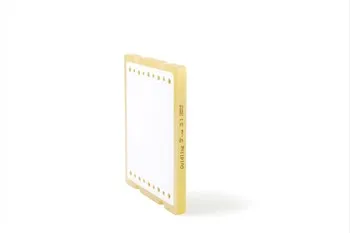
The core advantages of membrane chromatography stem from its unique flat-sheet membrane structure. Compared with conventional porous chromatography resins, membrane chromatography offers three key differences:
- Innovative mass transfer mechanism: Membranes rely primarily on convective mass transfer, eliminating the need for proteins to diffuse into porous media. This significantly reduces residence time and enables much faster processing.
- Significantly lower backpressure: The flat-sheet structure provides low flow resistance and can accommodate higher flow rates, overcoming the backpressure limitations commonly associated with traditional column chromatography.
- Strong process adaptability: Membrane chromatography is compatible with continuous manufacturing and can better match the high productivity of upstream processes. In addition, its smaller equipment footprint and lower membrane media requirements can help reduce overall manufacturing costs.
Of course, membrane chromatography also has certain limitations. These include larger elution volumes, which require additional buffer consumption; the need for further improvement in impurity clearance for challenging samples such as bispecific antibodies (bsAbs); and limited availability of some membrane products at large manufacturing scales. However, these challenges can be gradually addressed through optimized equipment design, the incorporation of additional depth-filtration steps, and other process improvements.
Industry Impact: Monoclonal Antibody Manufacturing Enters an Era of High-Efficiency Purification
The findings of this study provide the biopharmaceutical industry with a clear direction for technological advancement. For conventional mAb and Fc-fusion protein purification processes that prioritize high productivity, membrane chromatography has the potential to fully replace traditional packed-bed column chromatography. Even for more complex feedstocks, a combination strategy using membrane chromatography together with conventional chromatography resins can help achieve an optimal balance between processing efficiency and product purity.
As membrane material technologies continue to advance, future developments are expected to further reduce buffer consumption and improve scalability, accelerating the biopharmaceutical industry toward continuous, high-efficiency, and cost-effective manufacturing.
For biopharmaceutical manufacturers, early adoption and strategic deployment of membrane chromatography could become an important competitive advantage in the evolving market.