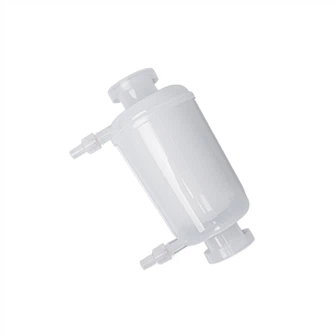

Application Of Membrane Chromatography in Downstream Protein Purification
Membrane chromatography is a technology used for the separation and purification of proteins and biomolecules during downstream processing. It is considered an effective alternative to conventional column chromatography because it can significantly enhance chromatographic performance in affinity, hydrophobic interaction, and ion-exchange modes.
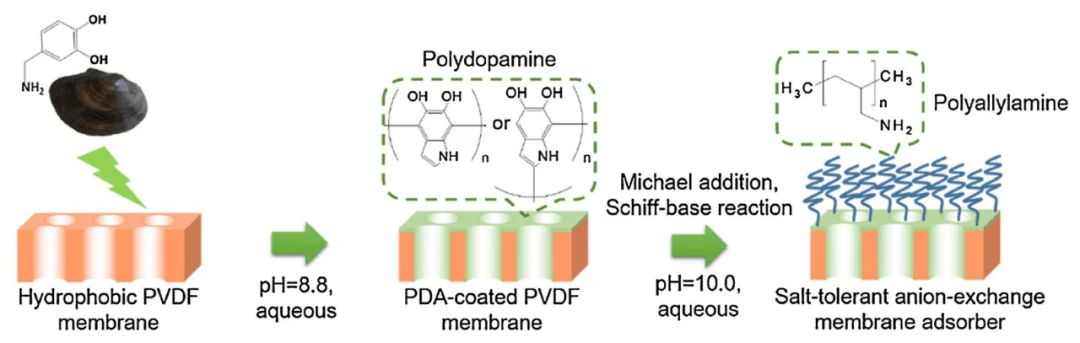
Membrane chromatography is primarily used in the biopharmaceutical industry, particularly for the purification of antibody drugs, viruses, and monoclonal antibodies.
Basic Principle of Membrane Chromatography, Membrane chromatography uses binding sites within the membrane matrix to separate and purify biomolecules. Compared with conventional column chromatography, membrane chromatography reduces the contact time between the biomolecules and the adsorbent, helping to preserve their native conformation while removing impurities and maintaining the biological activity of the target molecules.The internal structural design of membrane chromatography provides relatively large pores and minimizes size-exclusion effects, thereby significantly increasing the operating flow rate.
I. Development History of Membrane Chromatography
1. Origin (1980s)
Ion-Exchange Filter Paper: Ion-exchange functional groups were first introduced onto depth-filter paper for the removal of host-cell DNA. However, these early materials had low binding capacity and high levels of extractables.
Birth of the Sartobind Series: Modified cellulose acetate membranes improved product quality and laid the foundation for membrane-based bioprocessing. In its early development stage, this technology was commonly referred to as "adsorptive membranes."
2. Technological Breakthroughs (1990s–2000s)
Mustang Membrane Chromatography: Pall optimized ligand density, achieving dynamic binding capacities that surpassed those of conventional chromatography resins and driving membrane chromatography toward true "purification and separation" applications.
Commercialization: After 2012, companies such as Guidling, Sartorius, and Pall introduced membrane chromatography products based on anion exchange, cation exchange, hydrophobic interaction, and affinity mechanisms, gradually expanding their use as alternatives to conventional packed-bed chromatography.
3. Intelligentization and Expansion (2020s–Present)
Affinity Membrane Chromatography: Membrane chromatography products such as Guidling Q, SP, CM, and DEAE membranes offer residence times of as little as 10 seconds, with dynamic binding capacities of up to 55 g/L, resulting in up to a 15-fold increase in purification efficiency.
Multimodal and Continuous-Flow Processing: By combining ion-exchange and hydrophobic interaction mechanisms, membrane chromatography enables two-step monoclonal antibody purification while reducing buffer consumption by up to 85%.
II. Current Development Status of Membrane Chromatography
1. Technical Advantages
High Flow Rate: The membrane pore size is 3–5 μm, compared with approximately 0.04 μm for conventional chromatographic media. Operating flow rates can reach 500–1,000 cm/h, compared with 100–150 cm/h for traditional packed-bed chromatography.
High Binding Capacity: Convective mass transfer minimizes diffusion limitations, enabling dynamic binding capacities of over 2,500 g/m², such as those demonstrated by Guidling Q membrane chromatography.
Ease of Operation: Preassembled and ready to use, membrane chromatography eliminates column packing and regeneration steps. It is well suited for single-use systems and can reduce overall processing time by up to 60%.
2. Application Areas
Biopharmaceuticals: Monoclonal antibodies (HCP/DNA removal), viral vectors (adenovirus, AAV), and vaccines (influenza, COVID-19 VLPs).
Industrial Purification: Detoxification of polysaccharides (e.g., Streptococcus pneumoniae), recombinant protein capture, and endotoxin removal.
Environmental Applications: Wastewater treatment (heavy-metal adsorption) and phosphate removal from algal wastewater.
III. Development Trends of Membrane Chromatography
1. Technological Innovations
Smart-Responsive Media: Intelligent composite porous materials enable controlled adsorption and release, reducing reliance on high-salt conditions.
Nanofibers: A five-fold increase in specific surface area enables highly efficient binding of large biomolecules, such as plasmid DNA.
Multimodal Chromatography: Tandem anion-exchange and hydrophobic membranes can achieve up to 100% removal of monoclonal antibody aggregates while reducing the number of purification steps by 50%.
2. Process Upgrades
Continuous Processing: Integrating depth filtration, membrane chromatography, and ultrafiltration can reduce the monoclonal antibody production cycle from 4 days to 1 day.
Modular Design: Z2 cross-flow feed equipment provides resolution comparable to HPLC while increasing the flow rate by up to 40-fold, making it suitable for the purification of gene therapy vectors.
3. Application Expansion
Gene Therapy: Separation of AAV empty and full capsids, with membrane chromatography achieving binding capacities of up to 1 × 10¹³ VP/mL.
Extracellular Vesicle Purification: Sulfated cellulose membranes enable selective adsorption of exosomes, with recovery rates exceeding 80%.
Food Industry: Separation of whey proteins and removal of aflatoxins, providing an alternative to conventional phenol extraction methods.
IV. Challenges and Future Prospects
1. Current Limitations
Ligand Cost: Affinity membranes rely on expensive ligands such as Protein A, which limits the economic feasibility of single-use applications.
Scale-Up Challenges: As membrane area increases, uneven fluid distribution can become an issue, requiring optimization of module design, such as spiral-wound and hollow-fiber configurations.
2. Breakthrough Directions
Ligand Development: Design broad-spectrum ligands based on virus–host interactions, such as sulfated polysaccharide-based ligands that mimic heparin.
Green Processing: Trehalose can be used as an alternative to glycerol to reduce solution viscosity, while buffer consumption can be reduced by up to 85%.
AI-Driven Optimization: Computational fluid dynamics (CFD) simulations can be used to predict membrane fouling, optimize fluid dynamics, and improve pore-size distribution.
V. Typical Application Cases
1. Monoclonal Antibody Production
Guidling Q: For monoclonal antibody capture at a 2,000 L scale, the membrane volume is only 5 L, compared with 60 L of conventional chromatography media, reducing costs by 80%.
2. Virus Purification
Influenza Vaccines: Pseudo-affinity membrane chromatography achieves a recovery rate of 80%, with residual DNA below 0.5%.
Adenoviral Vectors: Zn²⁺-chelate membranes provide a binding capacity of 1 × 10¹³ VP/mL, with host-cell protein removal exceeding 99%.
Membrane chromatography overcomes the limitations of conventional chromatography through convective mass transfer, making it a key technology for reducing costs and improving efficiency in biopharmaceutical manufacturing. In the future, as smart materials are integrated with continuous-flow processes, membrane chromatography is expected to expand into gene therapy, precision medicine, and sustainable manufacturing, driving the bioprocessing industry toward a new era of higher efficiency and lower resource consumption.