
Study On Clarification Process Of High Density Fermentation Lysate Of Recombinant Escherichia Coli

In order to reduce the interference of material fluid to the chromatography and improve the recovery of target protein, the clarification process of high density fermentation lysate of two strains of recombinant Escherichia coli was studied. Strains BL21-HP1036 and BL21-palA expressing key genes of Streptococcus suis and Haemophilus parasuis were selected. Tangential flow process, high-speed centrifugation process and membrane cassette clarification process were used to evaluate the protein yield by turbidity and electrophoresis detection.
The results showed that BL21-HP1036, BL21-palA high density fermentation lysate expressing key genes of Streptococcus suis and Haemophilus parasuis were clarified by membrane cassette filtration and centrifugation, and the protein yield was over 80%, which could effectively reduce the chromatographic interference and improve the recovery rate.
Introduction
At present, Streptococcus suis (SS) and Haemophilus parasuis (HPS) are the most common bacterial disease pathogens in pig farms, which bring great losses to pig industry. SS can be divided into a total of 35 serotypes 1-34 and 1/2, and HPS can be divided into 1-15 serotypes, and the two are often mixed, mainly causing swine polyserositis, arthritis, meningitis, endocarditis, bacterial septicemia and bronchitis.
Due to the large number of serotypes of Streptococcus suis and Haemophilus parasuis, the cross-protection between different serotypes is weak, and antibiotic resistance will increase significantly when treated with antibiotics, which will affect the therapeutic effect.
Vaccines have become one of the effective means to prevent SS and HPS. There are inactivated vaccines, attenuated vaccines, live vaccines, subunit vaccines and genetically engineered vaccines, but inactivated vaccines and attenuated vaccines are mainly on the market, and their immune protection is good, but the cross-protection is not obvious. Subunit vaccine is a new type of vaccine against streptococcus suis, which is a new type of vaccine with strong cross-protection and low price. The research and development of subunit vaccines of Streptococcus suis and Haemophilus parasuis provides a perfect solution to the prevention and control problems of Streptococcus suis and Haemophilus parasuis that plague the pig industry in China.
Streptococcus suis and Haemophilus parasuis subunit vaccines are subjected to high density fermentation by recombinant Escherichia coli. Clarification of the lysate has a great effect on the yield of target proteins, but there are few relevant reports. How to realize the clarification step of fermentation and purification process is an important work. In this paper, recombinant E. coli BL21-HP1036, BL21-palA high-density fermentation as the object, to study how to efficiently reduce the turbidity of the clarifying solution, improve the protein yield, for Streptococcus suis subunit vaccine fermentation process to achieve industrial crushing and clarification technology to provide theoretical basis and technical support.
1. Materials and methods
1.1 Materials
1.1.1 Strains
Streptococcus suis and Haemophilus parasuis strains BL21-HP1036, BL21-pa-lA
1.1.2 Main media and reagents
Yeast extract and porpoise; Sodium chloride; Kanamycin, IPTG; Formaldehyde from; SDS-PAGE gel kit.
1.1.3 Main test equipment
High density fermenter; High speed centrifuge; Electrophoresis apparatus; Ultraviolet gel imaging system; Ultrasonic crusher; Small high speed centrifuge; Ultraviolet spectrophotometer; Constant temperature shaking table; Affinity chromatography equipment.
1.2 Methods
1.2.1 High-density fermentation culture
The qualified recombinant coliform strains BL21-HP1036 and BL21-pa-lA were inoculated on synthetic medium at 2%(V/V) and cultured at 37℃ for 35-40 h.
1.2.2 Recombinant protein induced expression
When the fermentation solution OD600=40±0.1, the induction began, the induction temperature was 35℃±0.5℃, and the culture was ended after 10h of induction.
1.2.3 High-pressure homogeneous crushing and centrifugation
The bacteria liquid that passed the inactivation test was crushed by a high pressure homogenizer for cell cracking respectively, with a pressure of 100~150 MPa. After crushing, the crushed liquid was kept at low temperature.
The supernatant was obtained by centrifuge with high speed, centrifugal speed: 15000 rpm, temperature control :10℃~15℃, injection speed :0.5~1 L/min, respectively, the supernatant was collected, and the supernatant was filled with containers that removed endotoxin.
1.2.4 Microfiltration membrane cassette clarification
The membrane was washed with 10L of purified water in one direction, and tangential flow filtration was carried out. 300 mL of the broken bacterial suspension after centrifugation was taken from the pipeline centrifuge and clarified with 0.45um microfiltration membrane cassette. Turbidity was measured by sampling respectively, and the turbidity after centrifugation, turbidity of the clarified liquid in the microfiltration membrane cassette and turbidity of the concentrated liquid in the microfiltration membrane cassette were compared. The protein content of the sample was detected by chromatography and electrophoresis to evaluate the protein yield.
Step 2: Results
2.1 Clarification data and test results of BL21-HP1036 and BL21-palA protein
The results in FIG. 1 show that the turbidity of BL21-HP1036 and BL21-palA recombinant Escherichia coli crushing fluid decreased from 4 500 NTU and 4 000 NTU to 1970 NTU and 520 NTU, respectively, after tube centrifugation. The turbidity of BL21-HP1036 and BL21-palA recombinant Escherichia coli was reduced to 25 NTU and 1.28 NTU by microfiltration membrane cassette method. It can be seen that the use of microfiltration membrane cassette tangential flow filtration and optimized open flow channel has a good effect on reducing endotoxin, viscosity and turbidity of chromatographic liquid than the traditional centrifuge filtration, and can significantly reduce the broken recombinant E. coli heteroprotein and nucleic acid.
2.2 Protein recovery of BL21-HP1036 and BL21-palA samples
Table 1 shows that recombinant Escherichia coli BL21-HP1036 protein exists in both the microfiltration clarified solution and the concentrated supernatant covered by the microfiltration membrane, and the total protein yield after recovering the protein from the microfiltration clarified solution and the concentrated supernatant is about 88.5%. BL21-palA protein also existed in the microfiltration exudate clarified solution and the supernatant of the concentrated solution covered by microfiltration membrane cassette. The total yield of BL21-PALa protein was 81.5%.
3. Conclusion
In this paper, the strains expressing the key genes BL21-HP1036 and BL21-palA of Streptococcus suis and Haemophilus parasuis respectively underwent high density fermentation and passed 0.45 The turbidity of the material liquid was significantly reduced by the um microfiltration membrane cassette process, indicating that the tangential flow filtration technology with microfiltration membrane cassette was better than that with high-speed centrifuge, and could significantly reduce the impurity protein and nucleic acid of the broken recombinant Escherichia coli.
After collecting the clear liquid in the single microfiltration membrane cassette, there was 62.9% As 37.1% of the target protein of BL21-HP1036 was microfiltration concentrate or existed in the microfiltration membrane cassette and other losses, a two-step method was adopted for clarification. In the first step, 0.45um microfiltration membrane cassette was used to clarify and collect the exudate; in the second step, the remaining concentrated liquid was collected after tube centrifugation, and the two step clarified liquid was combined as the chromatographic sample The turbidity value of BL21-palA fermentation liquid did not increase significantly, the protein yield could reach more than 85.5%, and the protein yield of BL21-Pala fermentation liquid could reach 81.5% after two-step treatment.
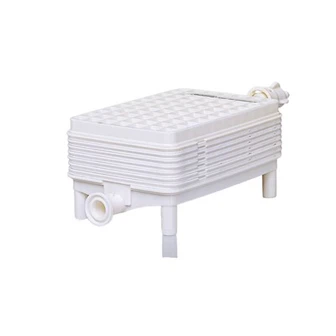
As for how to choose the microfiltration membrane cassette, Guidling Technology can provide you with high-quality solutions. Our microfiltration membrane cassette and ultrafiltration membrane cassette series products use polyether sulfone as the carrier, specially designed for biotechnology. Our polyether sulfone membrane has the advantages of high throughput, low protein adsorption, high mechanical strength, impact resistance and so on. We provide you with special membrane clamps to measure the pressure of the inlet and outlet in real time, and can provide technical visits according to your needs to customize your special ultrafiltration/microfiltration system. Such a small tangential flow system can be used for small, pilot and small-scale production, and can be fully linear amplification to fully meet your test requirements and production requirements.
About Guidling
Guidling Technology is a national high-tech enterprise focusing on biopharmaceuticals, cell culture, purification and concentration of biomedicine, diagnosis and industrial fluids. We have successfully developed centrifugal filter devices, ultrafiltration & microfiltration cassettes, virus filter, TFF system, depth filter, hollow fiber, etc. Which fully meet the application scenarios of biopharmaceuticals, cell culture, and so on. Our membranes and membrane filters are widely used in concentration, extraction and separation of pre-filtration, microfiltration, ultrafiltration and nanofiltration. Our many product lines, from small, single-use laboratory filtration to production filtration systems, sterility testing, fermentation, cell culture and more, meet the needs of testing and production. Guidling Technology is looking forward to cooperating with you!