


Lab-Scale Hollow Fiber TFF Systems in Biopharmaceutical Downstream Processing
Lab-scale hollow fiber tangential flow filtration (TFF) systems are essential tools in the downstream purification, filtration, and concentration processes of biopharmaceutical manufacturing. These systems utilize semi-permeable hollow fiber membranes to separate and concentrate biological molecules based on their size and molecular weight, enabling gentle, efficient processing of valuable biomolecules such as monoclonal antibodies, recombinant proteins, cell culture supernatants, and viral vectors.
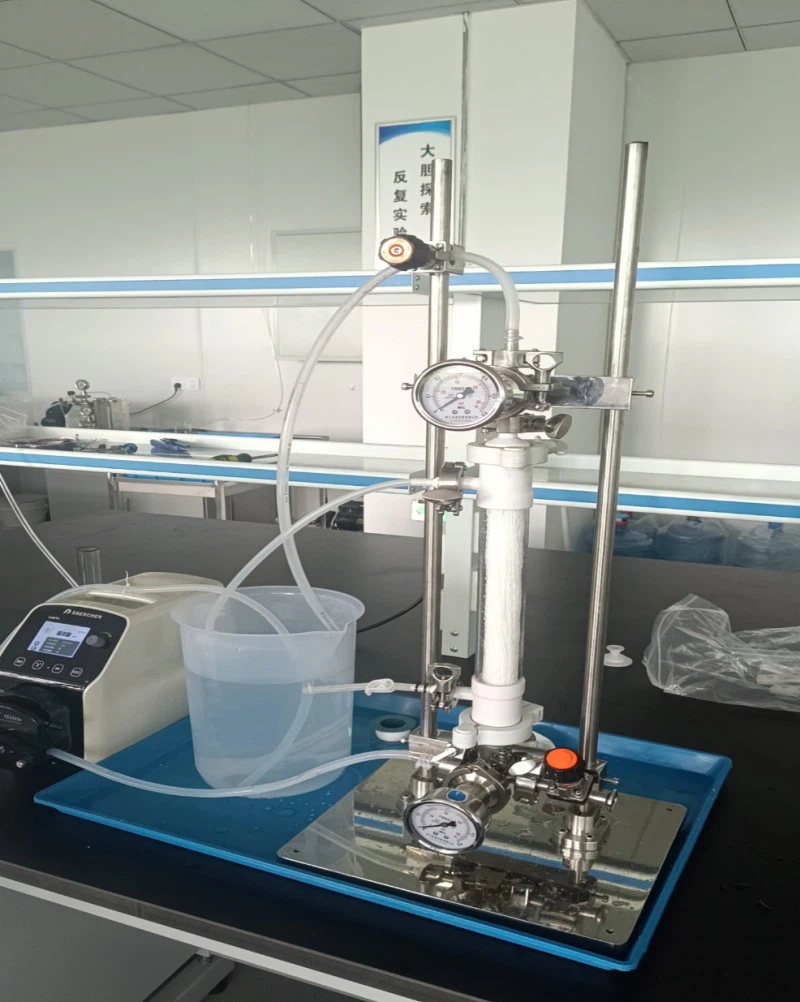
In downstream purification, hollow fiber TFF systems are commonly employed for buffer exchange and diafiltration, allowing contaminants like salts, nucleotides, and small impurities to be removed while retaining the target product. The cross-flow nature of TFF minimizes membrane fouling and shear stress, which is crucial for maintaining the biological activity and integrity of sensitive therapeutic molecules.
During filtration, lab-scale hollow fiber modules offer reliable performance for clarification and sterile filtration steps. They are used to remove cell debris, aggregates, and particulates from fermentation broths or lysates, thus improving sample quality before further purification stages such as chromatography. These systems can operate at low shear conditions and support volumes from a few milliliters to several liters, making them highly suitable for early-stage development and process optimization.
In concentration applications, hollow fiber TFF systems provide consistent and high-yield concentration of biologics with excellent product recovery. This is especially beneficial in preparing samples for analytical testing or formulation studies. Due to their modular design, lab-scale hollow fiber systems allow easy scalability to pilot or production scale without changing the core process parameters.
Overall, lab-scale hollow fiber TFF systems offer flexibility, efficiency, and scalability in the downstream processing of biopharmaceuticals. Their robust performance, ease of use, and ability to handle a wide range of sample types make them a critical component in modern bioprocess development workflows.


