
Ultra Cellular Repair Protein May Lead To Disruptive Advances In The Medical Aesthetic Industry?
Recently, the academic results of "Synthetic Biology Design and Fabrication of Supramolecular Elastin, an Ultra-strong Cellular Repair Protein," researched by Prof. Junjun Wu's group at the School of Bioengineering, Jiangnan University, in collaboration with Prof. Jingwen Zhou's and Academician Jian Chen's team, have been published in the international authoritative journal Advanced Materials(Impact Factor: 29.400). Through the multidisciplinary cross-fertilization of synthetic biology with computational bioinformatics, supramolecular chemistry, and nanotechnology, the research has created for the first time a supramolecular elastin, a super-powerful cellular repair protein, which is not only more effective than the existing commercially available recombinant proteins in the market, but also combines a number of star molecules (including hyaluronic acid, collagen, elastin, polyglutamic acid, mussel protein, polyglutamic acid, mussel protein, etc.).
Prof. Wu Junjun said, currently, the hyaluronic acid, collagen, mussel protein, polyglutamic acid and other star molecules are foreign personnel for the first time to discover and join the application, compared with the efficacy of these star molecules, this homemade supramolecular elastin developed by his scientific research team has a super strong cell repair properties, in nutritional health, skincare and cosmetic, medical devices, bio-hemostasis, medical aesthetics has an important application prospect. In the field of medical aesthetics industry, supramolecular elastin can be formed into injectable gel, with the ability to promote round wound tissue regeneration, the use of three days to restore 62.5% of the skin tissue, can be used as a substitute for surgical sutures to promote linear wound repair and tissue regeneration.
How to obtain functional proteins with stable supramolecular structures has been an industry challenge. The supramolecular elastin proposed in this study is obtained by the fusion of elastic recombinant protein and short peptide Ure2; the supramolecular hydrogel is obtained by the self-assembly of one or more supramolecular elastin proteins in aqueous solution, which can be static without any additional artificial interference. The obtaining of supramolecular elastin mainly includes three steps, which are the construction of genetically engineered bacteria, high-density fermentation, and protein separation and purification. In the protein separation and purification step, the study was completed by centrifugation, tangential flow filtration, and chromatography.
Next, the team plans to conduct clinical trials to prove the effect of supramolecular elastin and confirm its biosafety. Supramolecular elastin is "multi-functional" and has high commercial value and development prospects. Tangential flow ultrafiltration and microfiltration technologies will continue to play an important role in the subsequent R&D and production.
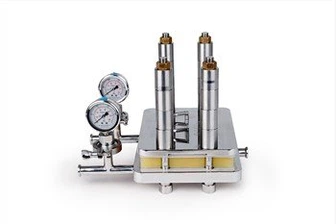
Guidling Technology is a national high-tech enterprise focusing on biopharmaceuticals, cell culture, purification and concentration of biomedicine, diagnosis and industrial fluids. We have successfully developed centrifugal filter devices, ultrafiltration & microfiltration cassettes, virus filter, TFF system, depth filter, hollow fiber, etc. Which fully meet the application scenarios of biopharmaceuticals, cell culture, and so on. Our membranes and membrane filters are widely used in concentration, extraction and separation of pre-filtration, microfiltration, ultrafiltration and nanofiltration. Our many product lines, from small, single-use laboratory filtration to production filtration systems, sterility testing, fermentation, cell culture and more, meet the needs of testing and production. Guidling Technology is looking forward to cooperating with you!