
Study On Process Characterization Of Ultrafiltration Membrane Cassette in Biopharmaceutical Field (Part 1)

Process Characterization (PC) is mainly studied on the influence of process input on process output, and the control range of process parameters can be determined by study, which would improve process stability, reduce batch differences and reduce the risk of failure. Ensure that process Performance validation batches (PPQ) and commercial production batches consistently produce products that meet quality standards.
Specific goal
Identify process parameters that affect product quality and yield: Process characterization allows you to determine which process parameters have a significant impact on a product's key quality attributes (CQA).
Determine the range of operating parameters and acceptable standards: this includes determining the control range of process parameters to ensure that the products produced meet the predetermined quality standards.
Determine the relationship between process parameters and key quality parameters: By analyzing the relationship between process parameters and key quality parameters, the process flow can be optimized and the product quality can be improved.
As more and more biopharmaceuticals enter the stage of critical clinical/registered clinical studies, Process characterization, Process Validation (PV) work is gradually put on the agenda. Process characterization and process validation based on QbD concept is one of the most important tasks in premarket pharmaceutical research.
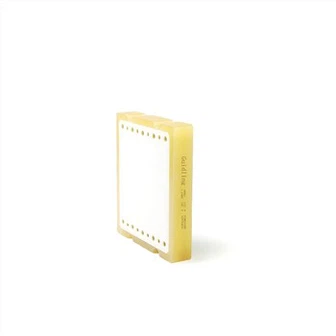
Ultrafiltration process has become an indispensable process step in biopharmaceutical production process, and flat membrane cassette has therefore become a key consumable in biopharmaceutical production. The study of the process characterization of ultrafiltration membrane cassettes in the field of biopharmaceutical applications is undoubtedly crucial, and it is related to the core interests and long-term development of products. The purpose of the ultrafiltration membrane cassette process characterization study is to study the influence of ultrafiltration process operating parameters on process performance/product quality, in order to determine the key process parameters and their set points and acceptable range. Membrane cassette is an important membrane component of tangential flow ultrafiltration system. The production process of tangential flow ultrafiltration is determined by many parameters, among which the key process parameters are: membrane material selection, membrane pore size selection, tangential flow control, effective TMP control, load verification, membrane area selection, system cleaning, membrane life verification, dialysis optimization, etc. These parameters not only affect each other but also restrict each other. To achieve the purpose of improving process stability and production efficiency at the same time, it is necessary to optimize these parameters first. Below we briefly introduce the optimization ideas of several key process parameters.
Membrane material selection
The materials of ultrafiltration membrane cassette are polyether sulfone (PES), regenerated cellulose (RC), polyvinylidene fluoride (PVDF) and so on.
Polyether sulfone (PES)
PES is the most widely used ultrafiltration membrane at present. PES has strong hydrophobicity or lipophilicity, so it has low water flux and poor anti-pollution ability. Therefore, most PES membrane on the market are modified hydrophilic polyether sulfone (PESU). PESU membrane is characterized by high flux, acid and alkali resistance, pressure resistance, heat resistance and oxidation resistance. It is mainly used in high-concentration protein solutions (such as monoclonal antibody, HSA, IgG, recombinant protein, etc.), cell harvesting, vaccines, antibiotics, contrast agents, traditional Chinese medicine, synthetic drugs, etc.
Regenerated cellulose (RC)
Compared with other materials, the biggest advantage of RC is the extremely low protein adsorption. In addition, cellulose is more compatible with organic solvents than polyether sulfone, but it cannot be cleaned and preserved with high concentrations of NaOH. RC membrane is mainly used in low concentration protein solution, the protein yield has high requirements and the solution contains organic solvents, but not all organic solvents can be ultrafilted with cellulose membrane, it is necessary to select against the compatibility of the membrane.
Polyvinylidene fluoride (PVDF)
PVDF is a special polymer material with excellent chemical stability, thermal stability and weather resistance, and has good mechanical strength and compressive resistance. This membrane has a high permeability and low blocking ability, can effectively transfer small molecules and water, while blocking large molecules and solid particles. In the field of biomedicine, PVDF membrane can be used for the preparation of purified proteins, cell culture, blood separation, etc. Although PVDF ultrafiltration membrane has good performance, it is often used in microfiltration process.
Membrane aperture selection
Ultrafiltration pore size is one of the important performance indexes of ultrafiltration membrane, which directly affects the separation efficiency and flux of the membrane. Too large aperture leads to poor filtration effect and can not effectively remove impurities; The aperture is too small will reduce the filtration speed, and even lead to blockage, affecting the service life of ultrafiltration membrane.
The selection of membrane pore size is generally 3-6 times of the molecular weight of the target substance, preferably 5 times, and high flow rate is achieved while ensuring high recovery. The following table shows the commonly used apertures of membrane cassette in some application scenarios.
Tangential flow control
Tangential Flow is the velocity of a fluid passing through and parallel to the surface of a membrane, usually expressed in liters per minute (L/min) or liters per square meter per hour (L/㎡/h) . Tangential flow plays a key role in tangential flow ultrafiltration, which determines the flow mode of the fluid on the membrane surface, thus affecting the filtration efficiency and the service life of the membrane. Tangential flow has a "cleaning" effect on the surface of the filter membrane, and appropriately increasing the tangential flow rate helps to alleviate the concentration polarization and increase the Flux. However, too high tangential flow will also increase the shear force subjected to the product, which may lead to a decrease in product activity. Therefore, the selection of the appropriate tangential flow rate needs to consider the tolerance of the sample and the requirements of the filtration process .
The tangential flow rate depends largely on the membrane cassette structure and screen type selected. Different suppliers will recommend different tangential flow rates according to the characteristics of their own membrane cassettes. The tangential flow rate recommended by Guidling ultrafiltration membrane is 4-6L/m²/min, but for some sensitive samples, it can be appropriately lower than the recommended range according to the actual situation.
Effective transmembrane pressure (TMP) control
TMP is a key parameter in tangential flow ultrafiltration process. Effective transmembrane pressure (TMP, unit: bar or psi) refers to the average pressure difference between the two sides of the membrane. Flux (L/m²/h, L/m²/h, LMH) is the amount of fluid passing through the membrane per unit time per unit membrane area. In tangential flow ultrafiltration process, TMP is closely related to Flux.
In the constant flow tangential flow ultrafiltration process, the relationship between Flux and TMP can be divided into two stages.
TMP= (Pin+Pout) /2-Pp (Pin= feed pressure, Pout= return pressure, Pp= transmission pressure).
Pressure related region: Initially, Flux is only affected by the resistance of the filter membrane, so Flux will increase linearly when TMP is increased.
Pressure independent area or gel layer control area: With the continuous increase of TMP, the filter membrane is gradually polarized by concentration, and part of the increased TMP is offset by the resistance of the concentration polarization layer, so the increase in Flux gradually slows down. Until finally, the filter membrane is completely polarized by concentration, and the increased TMP is completely offset by the resistance of the concentration polarized layer. At this time, the Flux no longer increases.
In the optimization process of tangential flow TMP, the Flux Flux and TMP are plotted to find the inflection point of the TMP (flux does not change with the increase of the TMP), and 70-80% of the value of the inflection point of the TMP is generally taken as the best TMP point. At this time, the filter membrane has not been completely polarized by concentration, and the flux value is relatively high.
Load verification
Capacity (L/m² or g/m²) refers to the volume or mass of filter liquid per square meter of membrane area. This is one of the more important indicators to measure filtration performance. The load of different liquids varies greatly, even if the same liquid (such as vaccines) is used, due to the different processes of various manufacturers, the filter selection and load and other performance indicators are not the same.
The following is the recommended capacity of Guidling ultrafiltration membrane cassettes for different membrane areas.
Before the process is determined, research and development experiments need to be carried out, and 0.11m² or 0.5m² membrane cassettes are generally used in the research and development stage. Taking the initial test using 10kd 0.11m² membrane cassette for 45min to process 2L liquid as an example, in order to determine the load of 10kd 0.11㎡ membrane cassette, the process time was first determined, and the processing time of 4L, 5L and 6L was recorded respectively with the test pressure of TMP < 1.0bar until the specified process time was reached. At this time, the corresponding processing capacity is the maximum load of 10kd 0.11m²membrane cassette in the estimated process time. In actual production, proportional amplification can be done.
If you want to know more about the load of Guidling ultrafiltration membrane cassettes, you can contact us for further in-depth discussion.
About Guidling
Guidling Technology is a national high-tech enterprise focusing on biopharmaceuticals, cell culture, purification and concentration of biomedicine, diagnosis and industrial fluids. We have successfully developed centrifugal filter devices, ultrafiltration & microfiltration cassettes, virus filter, TFF system, depth filter, hollow fiber, etc. Which fully meet the application scenarios of biopharmaceuticals, cell culture, and so on. Our membranes and membrane filters are widely used in concentration, extraction and separation of pre-filtration, microfiltration, ultrafiltration and nanofiltration. Our many product lines, from small, single-use laboratory filtration to production filtration systems, sterility testing, fermentation, cell culture and more, meet the needs of testing and production. Guidling Technology is looking forward to cooperating with you!