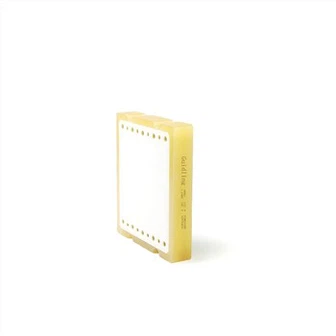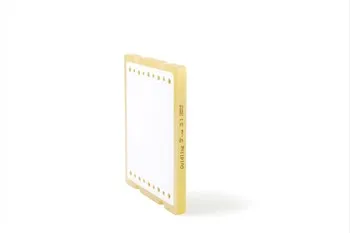

High-Capacity Clarification With 300 KDa Ultrafiltration Cassettes: Advancing Bioprocess Filtration Efficiency
In the evolving landscape of bioprocessing, efficient filtration and clarification methods are critical for the downstream purification of biologics, cell culture harvests, and other complex feedstocks. Among the technologies gaining traction for their superior performance are 300 kilodalton (kDa) ultrafiltration (UF) cassettes-membrane-based systems engineered for high-throughput clarification of cell lysates, viral particles, and large protein complexes.
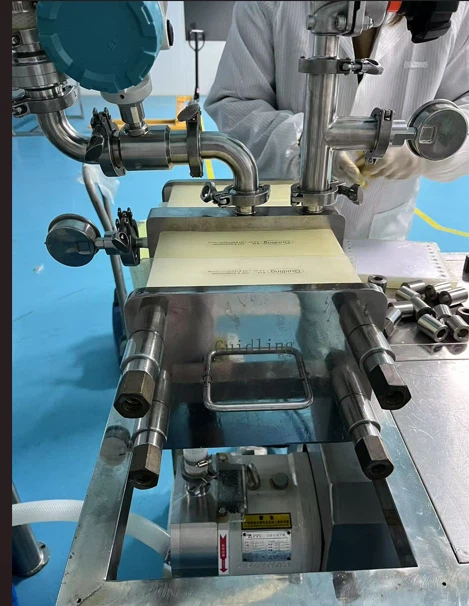
What Are 300 kDa Ultrafiltration Cassettes?
Ultrafiltration membranes are characterized by their molecular weight cut-off (MWCO), which defines the smallest molecule that will be predominantly retained by the membrane. A 300 kDa MWCO membrane is optimized to retain large biomolecules such as viruses, extracellular vesicles (EVs), and high-molecular-weight proteins, while allowing smaller proteins, DNA fragments, and other impurities to pass through.
These cassettes typically use polyethersulfone (PES) or regenerated cellulose membranes, offering high flux rates, low protein binding, and robust chemical compatibility.
Applications in Clarification and Filtration
300 kDa UF cassettes are ideal for:
- Primary Clarification of Bioreactor Harvests: Removing cells, cell debris, and large contaminants after upstream fermentation or cell culture.
- Viral Vector Purification: Retaining adenoviruses, lentiviruses, and AAVs while eliminating host cell proteins and DNA.
- Extracellular Vesicle (EV) Isolation: Capturing exosomes and microvesicles from biological fluids or conditioned media.
- Protein Aggregate Removal: Filtering out high-molecular-weight aggregates in monoclonal antibody (mAb) and protein drug production.
Advantages
- High Throughput: These cassettes offer large membrane areas and high permeability, allowing for rapid processing of large volumes.
- Selective Retention: The 300 kDa MWCO enables precise separation of target molecules from undesired smaller species.
- Scalability: Available in formats suitable for both bench-scale R&D and GMP manufacturing, these cassettes support linear scale-up.
- Compatibility with TFF Systems: They integrate easily into tangential flow filtration (TFF) setups, optimizing flow and reducing fouling.
Operational Considerations
- Transmembrane Pressure (TMP): Operating at low TMP minimizes membrane fouling and prolongs cassette life.
- Cleaning and Reuse: Many 300 kDa cassettes are reusable after proper cleaning and storage, reducing operational costs.
- Pre-Filtration: Including a depth filter or microfilter upstream can prevent membrane clogging and improve performance.

Conclusion
The use of 300 kDa ultrafiltration cassettes in filtration and clarification processes represents a robust solution for handling large, complex biologics. Their selectivity, speed, and scalability make them indispensable in modern biomanufacturing workflows, especially for gene therapy, vaccine development, and recombinant protein production.
As bioprocessing demands continue to grow, these cassettes offer a critical advantage in delivering high-purity, high-yield results with operational efficiency.