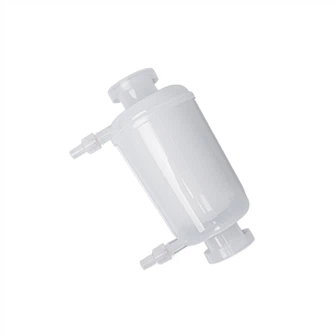

Industrial-Scale Downstream Purification Process For Bovine Infectious Rhinotracheitis (IBR) Vaccine — “Ultrafiltration” Section
Bovine infectious rhinotracheitis (IBR) is caused by infection with the bovine infectious rhinotracheitis virus (IBRV), also known as bovine herpesvirus type 1 (BHV-1). The disease is mainly characterized by respiratory symptoms and abortion. In addition to these clinical manifestations, IBR can lead to reduced milk yield in dairy cattle and decreased weight gain in beef cattle, resulting in significant economic losses for livestock farms.
The disease is immunosuppressive in nature. When occurring as a single infection, its pathogenicity is relatively low; however, when mixed infections with other viral or bacterial diseases occur, the severity and harm increase significantly. Vaccination is the most effective method for prevention and control, with two main types of vaccines available: live attenuated vaccines and inactivated vaccines. At present, the bovine infectious rhinotracheitis vaccines used on farms are predominantly inactivated vaccines.
Live attenuated vaccines are characterized by strong immunogenicity, rapid onset of immunity, and a long duration of protection (usually more than six months). They are commonly used for emergency immunization during disease outbreaks. However, they carry potential risks of virus shedding, pose risks to pregnant cows, and cannot be used in latently infected but asymptomatic cattle.
Inactivated vaccines are characterized by high safety, with no risk of virus shedding or reversion to virulence, and are considered absolutely safe. They can be used in cattle at all stages, including pregnant cows, calves, and breeding bulls. However, the onset of immunity is relatively slow and the duration of protection is shorter, so booster immunizations are usually required. In some cases, the protective efficacy may be weaker than that of live attenuated vaccines.
Regardless of whether a live attenuated vaccine or an inactivated vaccine is used, the downstream purification process can be divided into four main stages: harvest and clarification → concentration and primary purification → polishing purification → inactivation/sterile filtration and formulation.

Concentration is a core step in the downstream purification process of vaccines, immediately following clarification. Its primary goal is to rapidly reduce the harvested large-volume, low-concentration virus clarified solution to a small-volume, high-concentration form while maintaining viral bioactivity. This creates the necessary conditions for subsequent high-resolution but low-capacity fine purification steps, such as chromatography.
This step is typically carried out using tangential flow ultrafiltration (TFF). The principle is as follows: the viral feed solution flows parallel to the surface of an ultrafiltration membrane with a specific pore size. Under pressure, small molecules such as water, salts, and certain impurities pass perpendicularly through the membrane and are removed, while intact virus particles, which are much larger than the membrane pores, are retained, continuously recirculated, and concentrated. Compared with traditional high-speed centrifugation, this method is gentler for fragile viruses like IBRV, which have a lipid envelope. It effectively reduces virus structural damage and activity loss caused by high shear forces and is more amenable to linear scale-up for industrial production.
A successful concentration operation is far more than simply reducing volume. Key points for process optimization include: precisely controlling transmembrane pressure and feed flow rate to balance filtration efficiency while minimizing concentration polarization and membrane fouling; selecting appropriate membrane material and pore size to ensure high virus retention and permeate flux; and finding the optimal balance among virus recovery, concentration factor, and processing time. The concentrated viral suspension not only achieves a significantly higher titer but also attains preliminary purification by removing a large portion of water-soluble impurities. This provides the necessary volume and concentration foundation for subsequent critical refinement steps, such as chromatography and nuclease treatment, making concentration a central efficiency hub in the entire downstream process.
Secondary diafiltration is a critical step in vaccine downstream purification, positioned after fine purification and before formulation. It is typically carried out following chromatography and nuclease treatment. Its core purpose is not initial concentration, but system exchange and precise adjustment of the final formulation conditions. The process is performed in a tangential flow ultrafiltration (TFF) system, where fresh, clean formulation buffer is continuously added to the circulating concentrated viral solution, while the original solvent and small-molecule impurities are removed. This operation effectively and gently eliminates residual salts, organic solvents, nuclease degradation products, and trace soluble impurities remaining from the purification process.
The key is to maintain constant volume or apply minor concentration adjustments to ensure that the virus concentration meets formulation specifications. For fragile, enveloped viruses such as bovine infectious rhinotracheitis virus (IBRV), the gentle hydrodynamic environment of secondary diafiltration is crucial for preserving particle integrity and immunogenicity. Ultimately, this step provides a solid foundation for subsequent inactivation (if required), adjuvant or stabilizer addition, and final filling, ensuring that the final product enters the formulation with defined components, uniform conditions, and good compatibility. It is therefore one of the core steps for ensuring vaccine safety, stability, and batch-to-batch consistency.
IBRV is an enveloped, double-stranded linear DNA virus with an approximately spherical envelope. Mature IBRV particles have a diameter of about 160–230 nm. Accordingly, using 100, 300, or 500 kDa ultrafiltration membranes can retain IBRV while removing some contaminating proteins. The ultrafiltration recovery rate of Jiuling Technology membrane cassettes varies with the type of feed material, but generally reaches 90–95%.