
The Effect Of Ultrafiltration Membranes With Different Pore Sizes On Endotoxin Removal
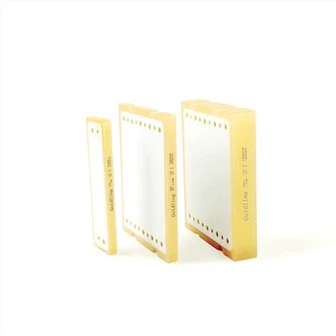
According to our statistics, in most cases, the selection of membrane cassettes with membrane aperture of 10kd or below can effectively intercept most endotoxins, reduce endotoxin content to a very low level, and meet the needs of most medical and pharmaceutical industry applications. The level of reducing endotoxin content was different with different pore size. In view of this aspect, we have done some research, the content is as follows:
What is endotoxin
Endotoxin, also known as lipopolysaccharide, lipid A, heat source, is a unique structure on the outer wall of the cell wall of Gram-negative bacteria (GNB), and is a complex of high relative molecular weight. Due to the chemical heterogeneity of endotoxin, the relative molecular mass of endotoxin from different sources can vary from thousands to tens of thousands, and because of the amphiphilicity of endotoxin, it can form an association in water, and the relative molecular mass of its association can reach 400,000 to 1,000,000.

Why should remove endotoxins
1. The role of endotoxin
Endotoxin has a significant thermogenic effect on mammals. The bacteria become toxic when they die or adhere to other cells. A small amount of endotoxin (2 ng/kg body weight) injected intravenously can cause fever, and large doses can cause circulatory disturbance and endotoxin shock. According to the provisions of the national pharmacopoeia, the content of endotoxin in a drug or preparation should be below the prescribed limit. For example, for human blood albumin, the limit of bacterial endotoxin content should be less than 2 EU/mL in accordance with the Test Procedure for Bacterial Endotoxin of Biological Products. The limit for bacterial endotoxins in interferons should be less than 10 EU/mL.
2. Endotoxin contamination
Endotoxin has obvious biological effects both in vivo and in vitro. In free cell systems, endotoxins at nanogram concentrations can affect the behavior of specific types of cells and even molecules, thus affecting normal physiological activities.
Therefore, endotoxin is the pollution source of most biological materials, and its existence makes many biological and drug tests appear chaotic results, which brings many difficulties to production.
(1) Contamination of drugs. For example, a wide variety of western medicines synthesized by chemical methods and traditional Chinese medicines extracted from plants may be contaminated by endotoxins during their synthesis or extraction.
(2) Raw materials for production. Various blood products and cell media can also be more or less contaminated during the preparation process.
(3) Biological agents. For example, interferon, interleukin or various therapeutic proteins or peptides manufactured by recombinant DNA technology, the use of E. coli as a carrier of expression in the manufacturing process, or various external factors, it is difficult to avoid endotoxin contamination.
The idea of removing endotoxin by ultrafiltration
Due to the large relative molecular mass of endotoxins, ultrafiltration membranes can be used to remove endotoxins from water. The selection of the pore size and material of the ultrafiltration membrane depends on the relative molecular weight, characteristics and pyrogen content of the drug being treated. In order to retain most pyrogen, it is necessary to use an ultrafiltration membrane with a relative molecular mass of 5000 or 10000, at which time the pressure during the operation is higher, and it is not suitable for some pharmaceutical preparations containing large relative molecular mass components. Because the removal of pyrogen will retain or adsorb the effective ingredients in the liquid, and the product yield is greatly affected.
Since endotoxin molecules are negatively charged under neutral conditions, the selection of positively charged materials such as polysulfone, polyacrylonitrile, polyamide and other microporous filtration membranes can enhance the removal effect of endotoxin molecules. In addition, it is also a method to stain diatomaceous earth on the cellulose film, and then adsorb positive polyelectrolyte on it for the removal of endotoxin. However, the removal effect of these charged microporous membranes on endotoxin was greatly affected by pH. The deep filter of Guidling Technology has diatomaceous earth, which can be freely selected whether to add positive charge according to the user's process. In the process of removing impurities such as cells, cell debris and miscellaneous proteins, its internal natural porous structure can increase the membrane load of filtration.
Endotoxin removal effect of ultrafiltration membranes with different pore sizes
Here we discuss the removal effect of ultrafiltration membranes from several different sources of endotoxin removal cases:
1. Removal of bacterial endotoxin in Shengmai injection by ultrafiltration method
1.1 Introduction
Pulse Injection is a kind of sterilized aqueous solution made from pulse SAN through dosage form reform. It is composed of red ginseng, ophiopogon and schisandra schisandrae. It has beneficial effects of invigorating qi pulse, strengthening and stabilizing dehydration, stabilizing blood pressure, increasing myocardial contractile force, and has good clinical effect in treating cardiovascular system and endocrine diseases.
1.2 Membrane Components
Guidling ultrafiltration membrane (interception relative molecular mass 10,30,100 kDa)
1.3 Experimental methods
1.3.1 Preparation of pulse-producing liquid intermediates
Refer to the preparation process of Zhongsheng Mai injection in National Drug Standard (WS3-B-2865-98-2011) and its revision (ZGB2011-48). Weighing 100 g of red ginseng, 312 g of ophiopogon and 156 g of schisandra chinensis, red ginseng was extracted by ethanol reflux method, and ophiopogon chinensis and schisandra chinensis were extracted by steam distillation method, and 1L of pulseproducing medicinal liquid intermediate was obtained (each 10 mL was equivalent to 1 g of red ginseng, 3 g of ophiopogon and 1.5 g of schisandra chinensis).
1.3.2 Ultrafiltration
A certain amount of pulse-making liquid intermediate was taken, the pH was adjusted to 7.5, and placed in the ultrafiltration system treated with water. After the interception of the 10,30,100 kDa relative molecular weight of polyether ultrafiltration membrane was ultrafilted, and the ultrafiltration cycle was balanced for 60min. After the ultrafiltration was complete, the recovery rates (R) of ginsenoside Rg1, Re, Rb1 and schisandrin A were calculated. The content of bacterial endotoxin before and after ultrafiltration was quantitatively measured by dynamic turbidity method, and the removal rate of bacterial endotoxin in the liquid was calculated (Q).
R=A filter /A primitive ×100%
Q= (C -C filter) /C ×100%
In the formula, A is the peak area of each active component in the ultrafiltrate, A is the peak area of each active component in the original drug solution, C is the content of bacterial endotoxin in the ultrafiltrate, and C is the content of bacterial endotoxin in the original drug solution.
1.4 Determination of the permeability of active ingredients
After ultrafiltration of two kinds of ultrafiltration membranes (with the relative molecular weight of 10, 30, 100kDa retained), the permeability of each active component is shown in Table 1. The results showed that with the increase of membrane pore size, the permeability of effective components increased correspondingly. When the pore size of the membrane reaches 100 kDa, the permeability of the effective components is equal to >. 90%, and all three active ingredients can pass through 100 kDa ultrafiltration membrane. The peak area of each active component in the 100 kDa membrane ultrafiltration solution before and after chromatogram was compared by HPLC, indicating that there was almost no loss of 4 components.

1.5 Study on the removal effect of bacterial endotoxin
The content changes of bacterial endotoxin in pulse-producing liquid intermediates before and after ultrafiltration by ultrafiltration membrane are shown in Table 2. The results showed that the contents of endotoxin in the original liquid decreased significantly after ultrafiltration with different relative molecular weight. After 100 kDa ultrafiltration membrane ultrafiltration, the content of endotoxin in the liquid was much lower than the limit value of 5.0EU·mL-1 in clinical Shengmai injection.

1.6 Discussion
In this paper, based on the effect of ultrafiltration membrane made of PSO, it was found that ginsenoside Rg1,Re,Rb1 and schisandra A had almost no loss when ultrafiltration membrane with interception relative molecular weight of 100 kDa was used, and bacterial endotoxins in the liquid could be effectively removed, meeting the clinical limit requirements. Compared with activated carbon for pyrogen removal, ultrafiltration technology can not only eliminate the problems of competitive adsorption and adsorption saturation, but also guarantee the safety of injection to a large extent, and provide experimental basis for the preparation process of Shengmai injection.
2. Influence of interception ultrafiltration membrane with molecular weight of 10kd on the pyrogen removal process of normal saline
2.1 Introduction
In the preparation of pyrogen free biological products, it is often encountered that exogenous endotoxin causes high pyrogen, and utensils can be solved by dry baking and sodium hydroxide soaking, but the large-scale preparation of the solution is not suitable for the above treatment, and it is considered to use tangential flow film packaging for large-scale solution to obtain qualified endotoxin content.
2.2 Endotoxin removal
2.2.1 Ultrafiltration treatment of samples
Bacterial endotoxin is much smaller than bacteria, with A diameter of about 1-50nm, lipid A is smaller, small size and light weight, and bacterial endotoxin has good heat resistance. Generally, tangential flow ultrafiltration membrane package 10kd is used to intercept endotoxin and take the tangential flow through the solution.

2.2.3 Experimental results

Guidling Technology used PES material 10kd membrane cassette to carry out microfiltration experiment on the feed liquid, and the results are as follows:
The results showed that the ultrafiltration membrane cassette with the interception molecular weight of 10kd produced by Guidling technology could effectively remove endotoxin and further expand the production.
About Guidling
Guidling Technology is a national high-tech enterprise focusing on biopharmaceuticals, cell culture, purification and concentration of biomedicine, diagnosis and industrial fluids. We have successfully developed centrifugal filter devices, ultrafiltration & microfiltration cassettes, virus filter, TFF system, depth filter, hollow fiber, etc. Which fully meet the application scenarios of biopharmaceuticals, cell culture, and so on. Our membranes and membrane filters are widely used in concentration, extraction and separation of pre-filtration, microfiltration, ultrafiltration and nanofiltration. Our many product lines, from small, single-use laboratory filtration to production filtration systems, sterility testing, fermentation, cell culture and more, meet the needs of testing and production. Guidling Technology is looking forward to cooperating with you!