
The Difference Between Microfiltration, Ultrafiltration, Nanofiltration and Reverse Osmosis
The Difference Between Microfiltration, Ultrafiltration, Nanofiltration and Reverse Osmosis
1. Microfiltration
The microfiltration membrane can retain particles larger than 0.1-1 microns. The microfiltration membrane allows the passage of macromolecules and dissolved solids (inorganic salts), but retains suspended solids, bacteria, and large molecular weight colloids. The operating pressure of the microfiltration membrane is generally 0.7-7bar.
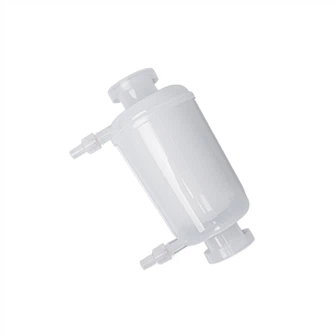
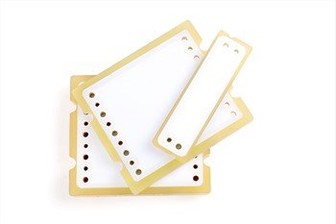
Microfiltration is often used in the clarification and sterilization of stock solution in biomedical processes. Microfiltration products are mainly filter elements of various materials.There are also laminated filter elements for deep filtration. At present, laminated filter elements are the main development trend. Laminated filter elements are also called membrane stacks. The mainstream is 7 to 20 layers. Each layer can have the same membrane pore size, or different layers can have different pore sizes. The laminated microfiltration membrane has a good effect for deep filtration sterilization and clarification of stock solution.
2. Ultrafiltration
Ultrafiltration membrane is a microporous filtration membrane with uniform pore size and rated pore size below 0.01μm. Appropriate pressure is applied on one side of the membrane to screen out solute molecules smaller than the pore size to separate particles with a molecular weight greater than 500 Dalton and a particle size greater than 10 nm. The ultrafiltration membrane is one of the earliest developed polymer separation membranes. The ultrafiltration device was industrialized in the 1960s.
In the biomedical process, ultrafiltration is widely used for the concentration of biomolecules and the replacement of system buffers. There are many ultrafiltration product. Users can select different products according to different samples and processing volumes.
3. Nanofiltration
Nanofiltration is a pressure-driven membrane separation process between reverse osmosis and ultrafiltration. Compared with other pressure-driven membrane separation processes, it appears later.
Nanofiltration separation is a new type of membrane separation technology, and its technical principle is similar to mechanical sieving. However, the nanofiltration membrane is charged. This is an important reason why it still has high desalination performance under very low pressure.
Nanofiltration membrane is a material with selective separation function. The process of using membrane selective separation to realize the separation, purification and concentration of different components of feed liquid is called membrane separation. It differs from traditional filtration in that membranes can separate on a molecular scale, and this process is a physical process that does not require phase changes and additives. Nanofiltration is mainly used for the concentration of low-molecular organic substances such as polypeptides.
4. Reverse osmosis
Reverse osmosis, also known as reverse osmosis, is a membrane separation operation that uses pressure difference as the driving force to separate the solvent from the solution. Because it is opposite to the direction of natural infiltration, it is called reverse osmosis. According to the different osmotic pressures of various materials, people can use the reverse osmosis pressure greater than the osmotic pressure, that is, the reverse osmosis method, to achieve the purpose of separation, extraction, purification and concentration.
Reverse osmosis is widely used in the preparation of space water, pure water, distilled water, etc.; wine manufacturing and water reduction; concentration, separation, purification and water distribution preparation of chemical processes; desalination of boiler feed water and so on.