
Guidling Technology Brings You to Learn the Simple and Efficient Method of Desalination and Concentration
Proteins often need to be desalted after separation and purification, and these salts are mainly derived from various ions in living organisms (e.g., sodium ions, potassium ions, chloride ions, etc.) as well as buffer salts in the extracts, salts in the eluents, and salt components of certain denaturants used for experiments. High concentration of salt may affect the activity and stability of proteins as well as their interactions with other molecules, generating interfering signals or reducing the accuracy of measurements in subsequent analytical methods such as electrophoresis, mass spectrometry, and crystallographic studies. Therefore, it is very necessary to desalt the purified proteins after separation, and the main desalting methods often used are membrane (dialysis and ultrafiltration) and gel filtration chromatography. In addition, in some cases, desalination can also be achieved by dilution.
Dialysis desalination, due to the long cycle and the need for a large number of replacement fluid, its application has been greatly restricted, and it's less used in industry, but mainly partly used in the laboratory, the laboratory is also gradually replaced by ultrafiltration tubes/ultrafiltration cup.
The main membrane separation technology used in the process of protein desalting and concentration is ultrafiltration. Ultrafiltration is a membrane separation technology with high efficiency, low energy consumption, no phase change, no need to add any chemical reagents, easy operation, mild conditions, the ability that could better maintain the activity of biological macromolecules, high recovery rate and other advantages, and its use in protein separation and purification has unique advantages.
Ultrafiltration is a membrane filtration method that uses a porous membrane as the separation medium and relies on the pressure difference between the two sides of the membrane as the driving force to separate substances of different molecular weights in solution, thus playing a role in desalination, concentration and purification. This is a new method developed in recent years, which is most suitable for the concentration or desalination of biological macromolecules, especially proteins and enzymes. The key to the application of ultrafiltration is the choice of membrane, different types and specifications of the membrane, have the difference in water flow rate, molecular weight cut-off and other parameters, it must be selected according to the relevent work needs. In addition, the form of ultrafiltration device, solute composition and property, solution concentration, etc. have a certain influence on the effect of ultrafiltration.
The application of ultrafiltration technology for desalting and concentrating proteins in the purification process of proteins is characterized by its suitability for the treatment of large quantities of liquids ranging from a few hundred to a few thousand liters with the advantages of simplicity of operation, time-saving, and high protein recovery rate. The ultrafiltration method is matured from ultrafiltration tubes for laboratory micro-volume processing, ultrafiltration cups for small-volume processing, and ultrafiltration systems for industrial use.
Ultrafiltration is subdivided into direct pressure ultrafiltration and tangential flow filtration, and at present, tangential flow filtration is mainly used in the industry, which is widely used in desalination and buffer replacement.
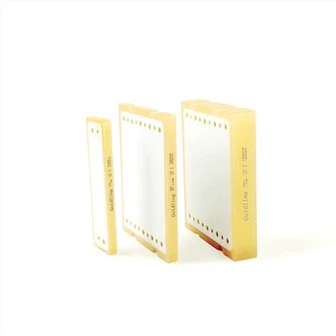
The following is an example of the application of Guidling Technology's ultrafiltration membrane cassettes in protein desalination and concentration.
We used a 0.11㎡ 10 kd pore size membrane cassette (G01100010K) to desalt and concentrate 500 mL of PEG-modified growth hormone solution at a concentration of 0.2 mg/mL. Throughout the ultrafiltration process, the desalination rate, protein recovery rate, membrane flux failure condition, and water flux recovery rate were examined.
Before and after the use, we tested the water flux of the membrane cassette separately, and the recovery rate of the membrane cassettes reached 98% under the premise of maintaining the same feed rate, feed pressure and reflux pressure.
The whole process processed a total of 2L of material and took 40min, 0-5min was the concentration process, 5-35min was the liquid exchange process, and 35-40min was the over-concentration process. Throughout the ultrafiltration process, the TMP was stabilized between 0.7-0.8 bar, the feed rate was constant, and the average material flux was 27 LMH.
2L of material concentrated liquid exchange to 60mL, about 33 times concentrated, desalination rate reaches to 99%, recovery rate reaches to 80%, after a wash, an increase of 50mL of liquid, the total recovery of 88%, industrial production according to the dead volume of pipeline calculations, as far as possible to increase the number of times of the top wash, general top wash 3 times can be completely recovered.
Guidling Technology membrane cassettes are made of medical grade inert materials with strong corrosion resistance and can withstand strong alkali cleaning; the use of automated manufacturing process ensures the continuity and quality reliability of the product, higher mechanical strength, backpressure resistance, and repeated rinsing performance; it has super hydrophilicity, which can give the membrane higher flux and lower protein adsorption; we also have an optimized flow channel design with a smaller pressure drop which facilitates material transfer and significantly shortens the filtration time.
Our membrane cassettes are available in a wide range of pore sizes, from 1kd to 1000kd. Among them, 1-10kd ultrafiltration membrane cassettes can be used for desalination and pyrogen removal; 30kd ultrafiltration membrane cassettes can be used for monoclonal antibody concentration and buffer replacement; at the same time, our hollow fiber products can also be used for the concentration and replacement of biologics, with pore sizes of 100kd, 300kd, and 500kd, which are mainly used for a large number of applications in vaccine products.
Guidling Technology is a national high-tech enterprise focusing on biopharmaceuticals, cell culture, purification and concentration of biomedicine, diagnosis and industrial fluids. We have successfully developed centrifugal filter devices, ultrafiltration & microfiltration cassettes, virus filter, TFF system, depth filter, hollow fiber, etc. Which fully meet the application scenarios of biopharmaceuticals, cell culture, and so on. Our membranes and membrane filters are widely used in concentration, extraction and separation of pre-filtration, microfiltration, ultrafiltration and nanofiltration. Our many product lines, from small, single-use laboratory filtration to production filtration systems, sterility testing, fermentation, cell culture and more, meet the needs of testing and production. Guidling Technology is looking forward to cooperating with you!