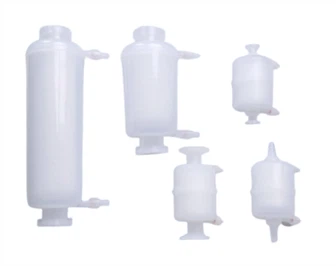

Application of Ultrafiltration in the Production Process of DTP Vaccine
Application of Ultrafiltration in the Production Process of DTP Vaccine
1. DTP Vaccine
Pertussis, commonly known as whooping cough, is an acute respiratory infectious disease caused by Bordetella pertussis, primarily affecting infants and young children. It is transmitted through respiratory droplets and has an incubation period of 7 to 10 days. The patient will develop symptoms of sputum accumulation, including coughing. Diphtheria is an acute respiratory tract infection caused by Corynebacterium diphtheriae. The bacteria invade the nasal mucosa or throat, proliferate, produce exotoxins and cause local inflammation and tissue necrosis. Tetanus, caused by Clostridium tetani, enters the human body through skin or mucous membrane wounds. It thrives in anaerobic conditions and produces toxins, triggering spasmodic muscle contractions.
The DTP vaccine is a combination vaccine that contains effective components of Bordetella pertussis, diphtheria toxin, and tetanus toxin mixed in certain proportions and adsorbed onto an aluminum hydroxide adjuvant. It is used to prevent three diseases: pertussis, diphtheria and tetanus.
2. Production Process of DTP Vaccine
The DTP vaccine is typically an inactivated vaccine. The preparation of the DTP vaccine follows the inactivated vaccine production process, primarily for safety reasons. Currently, the production process of DTP vaccines in China is largely based on technology in the 1970s and 1980s.However, throughout the process, the dialysis steps involved too many conventional filtration stages, significantly impacting the overall production process of the product. Tangential flow membrane filtration products with open channels offer advantages in the downstream separation of biological products, such as low shear forces and high recovery rates. They are particularly suitable for the separation of samples with high concentrations, high viscosities, and high particle content, making them suitable for the production process of DTP vaccines.

3. Application of Hollow Fiber Ultrafiltration Technology in the Purification Process of Cell-Free DTP Combined Vaccine Antigen Liquid
(1)Materials and Methods
①Sample
Decontaminated and refined cell-free DTP antigen solution (hereinafter referred to as decontaminated antigen solution).
②Main Reagents and Instruments
Injection-grade water; sodium chloride (pharmaceutical grade); dialysis bag; 10kDa hollow fiber; peristaltic pump.
③Ultrafiltration and Purification of Cell-Free DTP Antigen Liquid
First of all, concentrate the decontaminated antigen solution to about 5-fold the initial volume using a 10kDa hollow fiber. Subsequently, begin the filtration and washing process. Next, stop filtration when the filtrate volume reaches approximately 4 to 5 times the initial volume. Finally, rinse the entire system and recover the filtrate using 1-fold volume of physiological saline.
④Dialysis and Purification of Cell-Free DTP Antigen Liquid
Aseptically pack the decontaminated antigen solution into dialysis bags and immerse it in 0.85% sterile sodium chloride solution and then conduct dialysis at 2-8°C.
⑤Identification of Purified Liquid
Proportionally restore the ultrafiltration and dialysis-recovered liquid samples to the pre-purification volume. Use decontaminated antigen solution as a control and analyze the purity of the samples using 12% SDS-PAGE. Measure solid content in the solutions and calculate the recovery rate after centrifuging the samples at 10,000 rpm for 15 minutes.
Results
①Hollow Fiber Ultrafiltration Concentration and Washing
During the ultrafiltration concentration process, 4,800 mL filtrate is obtained within 70 minutes, resulting in a 5-fold concentration. The filtration rate steadily decline, with an average filtration rate of 42 LMH (69.6 mL/min). During the washing process, 5,300 mL filtrate is obtained within 90 minutes, resulting in a 4.4-fold washing, and the filtration rate steadily decline, with an average filtration rate of 36 LMH (59.5 mL/min). Finally, rinse the entire system with 1,200 mL physiological saline, and mix the rinse solution with the previous wash solution (1,200 mL). The final concentration factor of the liquid is 2.5-fold. Compared with ultrafiltration, dialysis requires changing the dialysate five times and takes approximately 6 days.
②Identification of Purified Liquid
SDS-PAGE analysis revealed that the purity of the cell-free DTP vaccine antigen liquid purified by both ultrafiltration and dialysis methods remain relatively unchanged, as shown in the figure below. The recovery rate of ultrafiltration purification is slightly lower than that of dialysis purification, as indicated in the table below.

|
Sample |
Solid Content(%) |
Recovery Rate(%) |
|
Decontaminated Antigen Solution |
0.872 |
/ |
|
Ultrafiltration-recovered Liquid (reduced) |
0.803 |
92.1 |
|
Dialysis-recovered Liquid (reduced) |
0.813 |
93.2 |
Conclusion
Hollow fiber ultrafiltration is a membrane separation technology widely used in industries such as food, fermentation, pharmaceuticals, environmental protection, and chemical engineering for the separation, concentration, and purification of large molecular substances. In this experiment, hollow fiber ultrafiltration technology was employed to purify the decontaminated cell-free DTP antigen solution. The experimenter compared with traditional dialysis in terms of purification efficiency and recovery rate. The results showed that ultrafiltration had a higher efficiency in removing detoxifying agents and pigments (achievable within 3 hours, compared to 5-7 days for dialysis) and had a higher recovery rate. These suggest that the application of hollow fiber for ultrafiltration purification of cell-free DTP vaccine antigen liquid is feasible. It can replace existing dialysis processes.