

How to improve the selectivity of a flat sheet membrane?
If you’ve spent any time working with flat sheet membranes, you know that selectivity isn’t just a performance metric—it’s the difference between a process that works and one that delivers consistent, reliable results. As a flat sheet membrane supplier, I’ve talked to hundreds of teams struggling with this: they can get flux rates, but their target components are seeping through, or they’re losing valuable product because non-target particles are passing through. Improving selectivity doesn’t have to mean a complete membrane overhaul. Over the years, I’ve worked with clients to tweak processes, adjust membrane properties, and optimize operating conditions to boost selectivity without sacrificing other critical metrics like flow or durability. Let’s break down what actually moves the needle, and how you can apply these steps to your own workflow.
First, let’s ground this in what membrane selectivity actually means. For flat sheet membranes, selectivity is the ability to separate specific components—say, retaining large proteins while letting small salts pass, or filtering bacteria out of a fermentation broth—based on size, charge, or chemical affinity. The flat sheet format, unlike spiral wound or hollow fiber, has a distinct surface area-to-thickness ratio that makes it ideal for lab-scale development, small-batch manufacturing, or applications where easy access to the membrane surface is key. But that same flat geometry can present unique challenges for consistency, especially if you’re not matching the right membrane properties to your process needs.
One of the most common mistakes I see clients make is picking a membrane with the wrong pore size distribution. You might think “pore size is pore size,” but in reality, flat sheet membranes have a range of pore sizes, not a single perfect diameter. For example, a membrane labeled 0.2μm doesn’t mean every pore is exactly 0.2μm—some are bigger, some are smaller. If your target is to retain particles 0.2μm and larger, those oversized pores are going to let some of your target through, and that’s where selectivity drops. That’s why we’ve spent years refining our microfiltration cassette lines, including specialized options like our 0.1um Microfiltration Cassettes for applications where fine, consistent pore control is non-negotiable. These cassettes are manufactured using a precision stretching process that narrows pore size distribution, reducing the number of “leaky” pores that can compromise selectivity. We’ve seen clients switch to these from generic flat sheet membranes and immediately see a 15-20% jump in component retention, just from that single adjustment.
Pore size isn’t the only structural factor at play, though. The membrane’s surface chemistry has a massive impact on selectivity, especially for separations that rely on charge or hydrophobicity rather than just size. A lot of standard flat sheet membranes use unmodified polyethersulfone (PES), which is highly durable but has a slightly hydrophobic surface that can cause fouling and non-specific adsorption. If your process involves separating charged molecules, this unmodified surface might cause both your target and non-target components to stick, making it hard to distinguish between them. We offer Polyethersulfone Microfiltration Cassettes with engineered surface modifications: for example, hydrophilic coatings that reduce non-specific binding, or charged functional groups that repel components with the same charge as your target. I had a biopharma client a few months back who was using a standard flat sheet to separate monoclonal antibodies from host cell proteins. They were losing 12% of their antibody to adsorption on the membrane surface, which threw off their selectivity. Switching to our modified PES cassettes cut that adsorption to less than 2%, and their component selectivity improved dramatically—they were retaining 99.8% of their target while letting host cell proteins pass through easily. That’s a great example of how surface chemistry can be just as impactful as pore size.

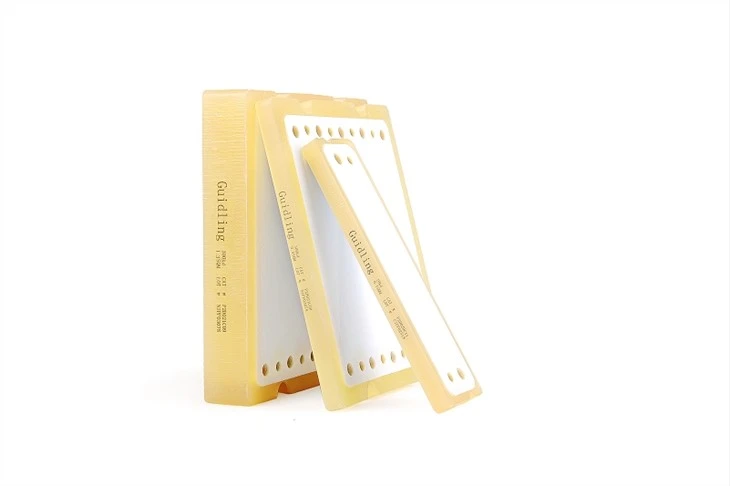
Once you’ve picked the right membrane, the next step is optimizing operating conditions, because even the best membrane will underperform if you’re running it incorrectly on a flat sheet system. Flux rate, pressure, and cross-flow velocity (for systems that use it) all play a role in selectivity. Let’s start with pressure. If you run your flat sheet membrane at too high a pressure, you can compress the membrane’s pore structure, or force particles to get wedged into pores that are supposed to be open. For example, in microfiltration, transmembrane pressure (TMP) above the recommended range can cause cake formation on the membrane surface—those accumulated particles can act as a secondary filter, but if the cake is uneven, you get inconsistent separation, and selectivity drops. I always tell clients to test TMP in incremental steps, starting low, and measure retention rates at each level. Most flat sheet membranes perform best at TMP levels between 10 and 30 psi for microfiltration, but that can vary based on your application. If you’re using tangential flow filtration (TFF), this is even more critical: our TFF Microfiltration Cassettes are designed to maintain consistent pore structure across a range of pressures, so you don’t have to choose between high flux and good selectivity. Clients who switch our TFF cassettes to their old flat sheet systems often find they can run at slightly higher flux without sacrificing retention, because the cassettes are engineered to prevent pore compression.
Cross-flow velocity (CFV) is another operating parameter that’s often overlooked when targeting better selectivity. Cross-flow works by sweeping particles away from the membrane surface, reducing cake formation. If CFV is too low, cake layer builds up, and some components get trapped or pushed through pores, hurting selectivity. If it’s too high, you can shear delicate target components (like cells or proteins) or waste energy unnecessarily. For flat sheet systems, which have a wider flow channel than hollow fiber, CFV is easier to adjust, but finding the sweet spot is key. For example, a food and beverage client I worked with was using flat sheet membranes to filter yeast from a beer fermentation broth. They were running at a CFV that was too low, leading to heavy cake formation, and were losing 8% of their yeast (their target) in the permeate, while also letting small bacteria through. By increasing CFV just enough to keep the cake layer thin (but not so high that it damaged the yeast), they cut yeast loss to less than 1% and improved bacterial retention by 10%. We often recommend that clients test CFV at 0.5, 1.0, and 1.5 m/s for TFF applications, adjusting based on their specific component sizes and stability.
Fouling is the biggest enemy of long-term selectivity, and it’s something every flat sheet membrane user deals with. Fouling happens when particles, proteins, or other components stick to the membrane surface or get lodged in pores, narrowing them over time or blocking them entirely. This leads to inconsistent separation, because the effective pore size changes as fouling builds. To combat this, it’s not just about picking a good membrane—it’s about implementing a regular cleaning protocol that’s gentle but effective. For reusable systems, our Resuable TFF Cassettes are designed to withstand multiple cleaning cycles (up to 50, in many cases) without losing pore structure or surface chemistry. The key to cleaning for selectivity is to use cleaning agents that target the specific type of fouling. For example, if you’re dealing with protein fouling, a mild detergent like 0.1% SDS at 40°C will help break down protein aggregates without damaging the membrane. For organic fouling (common in wastewater applications), a pH-adjusted cleaning solution or enzymatic cleaner works well. We’ve seen clients skip proper cleaning and watch their selectivity drop by 25% after just a few uses, but with a consistent cleaning routine, that same membrane can maintain its selectivity for months. One client even switched to our reusable TFF cassettes specifically because their disposable membranes fouled so quickly that selectivity was inconsistent batch to batch—now they get consistent results every run, even after 10 uses.
Another often-overlooked factor is membrane storage and handling. Flat sheet membranes are delicate, and improper storage can damage the surface or alter pore structure, leading to poor selectivity before you even use them. I always advise clients to store membranes in a cool, dry place, away from direct sunlight or extreme temperatures, and to keep them moist if they’re not going to be used right away. For example, if a membrane dries out, some PES membranes can have their surface chemistry change, leading to increased adsorption or pore narrowing. We package all our cassettes in sealed, humidity-controlled pouches to prevent this, but it’s still important to follow handling guidelines. If you do accidentally let a membrane dry out, you can often rehydrate it in deionized water for 24 hours to restore most of its properties, but it’s not a perfect solution—better to avoid that step altogether.
Let’s also talk about application-specific tweaks, because selectivity looks different depending on what you’re separating. For example, if you’re working with cell retention in bioreactors, flat sheet TFF systems are ideal because they can retain large mammalian cells (10-30μm) while letting media and small proteins pass. In this case, using a membrane with a slightly larger pore size (0.45μm) but good pore size distribution will give you high cell retention (selectivity) without blocking media flow. On the other hand, if you’re filtering nanoparticles or virus particles, you’ll need much smaller pores, which is where our Flat Microfiltration Cassettes with precise 0.1μm pore sizes come in handy. For wastewater treatment, where you need to remove both suspended solids and bacteria, a membrane with a charged surface can help repel negatively charged bacteria, improving selectivity over unmodified membranes.
I’ve been in the membrane industry for 12 years now, and one thing I’ve learned is that there’s no one-size-fits-all solution for improving selectivity. It’s a combination of choosing the right membrane properties (pore size, surface chemistry, format), optimizing operating conditions (pressure, flow rate), implementing a good cleaning routine, and handling the membrane properly. Too often, clients focus only on the membrane itself, overlooking how process parameters and maintenance impact performance. But when you combine all these elements, you can get selectivity that’s consistent, reliable, and tailored to your specific application.
If you’re struggling with selectivity in your flat sheet membrane process, whether it’s retaining your target components, reducing impurities, or cutting down on fouling, I’d encourage you to reach out to our team. We work with labs and manufacturing facilities across industries—biopharma, food and beverage, wastewater, and more—to match the right cassette to your needs, whether that’s our precision 0.1um Microfiltration Cassettes, modified Polyethersulfone Microfiltration Cassettes, or reusable TFF cassettes for long-term consistency. We can help you test different membrane options, adjust operating parameters, and set up a cleaning protocol that will boost your selectivity and improve your overall process efficiency. Don’t let inconsistent separation hold your work back—let’s talk through how we can help.
References
- Baker, R.W. (2012). Membrane Technology and Applications (3rd ed.). John Wiley & Sons.
- Kim, J., & Van der Bruggen, B. (2010). The importance of membrane surface properties and pore structure in microfiltration selectivity. Journal of Membrane Science, 362(1-2), 1-12.
- Mulder, M. (1996). Basic Principles of Membrane Technology (2nd ed.). Kluwer Academic Publishers.
- Zeman, L. J., & Wales, M. (1997). Microfiltration and Ultrafiltration: Principles and Applications. Marcel Dekker.