

Can TFF Membrane Cassettes be used for the clarification of cell culture supernatants?
Hey there! As a supplier of TFF Membrane Cassettes, I often get asked if these bad boys can be used for the clarification of cell culture supernatants. Well, let's dive right into it and find out!
What are TFF Membrane Cassettes?
First off, let's quickly go over what TFF Membrane Cassettes are. TFF stands for Tangential Flow Filtration. These cassettes are a key part of the TFF system, which is a type of filtration method where the feed stream flows parallel to the membrane surface. This is different from normal filtration (dead - end filtration) where the feed goes straight through the membrane.
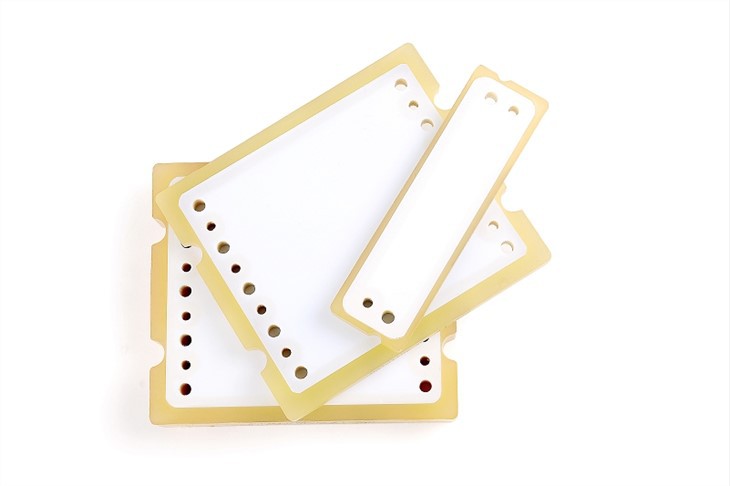
Our TFF Membrane Cassettes come in a variety of types and pore sizes. For instance, we have Flat Microfiltration Cassettes, which are great for a wide range of applications. They offer a large surface area for filtration, which can increase the throughput and efficiency of the process.
Can They Clarify Cell Culture Supernatants?
The short answer is yes! TFF Membrane Cassettes are highly effective for clarifying cell culture supernatants. Cell culture supernatants are the liquid part that remains after cells are grown in a culture medium. This supernatant can contain all sorts of stuff like proteins, antibodies, and other biomolecules that we want to isolate and purify. But it also has cell debris, aggregates, and other unwanted particles.
One of the main advantages of using TFF Membrane Cassettes for this purpose is their ability to handle large volumes. In biotech and pharmaceutical industries, cell cultures can be quite large - sometimes thousands of liters. TFF systems with these cassettes can process these large volumes efficiently, thanks to the tangential flow design. This design helps prevent the build - up of particles on the membrane surface (a problem known as fouling), which can clog normal filters and reduce filtration efficiency.
Let's talk about the different pore sizes available in our cassettes. For cell culture supernatant clarification, 0.22um Microfiltration Cassettes and 0.65um Microfiltration Cassettes are commonly used. The 0.22um cassettes are great for removing small particles, bacteria, and some viruses. This is important because in many cases, we want a sterile supernatant for further processing. The 0.65um cassettes, on the other hand, are useful for larger particle removal. They can quickly remove cell debris and larger aggregates, which can then be followed by a finer filtration step if needed.
The Role of Membrane Material
The material of the membrane in the cassettes also matters a lot. Our Polyethersulfone Microfiltration Cassettes are a popular choice. Polyethersulfone (PES) has several great properties. It has a high flow rate, which means it allows the liquid to pass through quickly. This is crucial for large - scale cell culture supernatant clarification, as we want to get the job done fast.
PES also has good chemical resistance. Cell culture media can contain a variety of chemicals, and the membrane needs to be able to withstand them without degrading. Plus, it is low - protein binding. This is important because we don't want the valuable proteins in the cell culture supernatant to stick to the membrane. If proteins bind to the membrane, it not only reduces the yield of our target molecules but also can cause fouling more quickly.
The Microfiltration Membrane in Action
The Microfiltration Membrane inside the TFF Membrane Cassettes works like a sieve. As the cell culture supernatant flows tangentially across the membrane surface, the small molecules and the liquid (the permeate) pass through the pores, while the larger particles (the retentate) are kept on the feed side. This process can be repeated multiple times to achieve the desired level of clarification.
During the filtration process, we can adjust different parameters like the pressure, flow rate, and temperature. These adjustments help optimize the filtration process. For example, increasing the pressure can increase the flow rate of the permeate, but too much pressure can cause fouling or damage the membrane. So, it's all about finding the right balance.
Advantages Over Other Filtration Methods
Compared to other filtration methods, TFF Membrane Cassettes have a lot going for them when it comes to cell culture supernatant clarification. For example, traditional dead - end filtration is often prone to clogging, especially when dealing with large volumes of cell culture supernatant. Once the filter clogs, the filtration process slows down or stops altogether, and the filter usually has to be replaced.
In contrast, the tangential flow design of TFF Membrane Cassettes keeps the particles moving along the membrane surface, reducing the chances of clogging. This means we can run the filtration process for longer periods without interruption, which is a huge plus in industrial - scale operations.
Considerations for Using TFF Membrane Cassettes
While TFF Membrane Cassettes are great for cell culture supernatant clarification, there are a few things to keep in mind. First, they require a proper setup. You need to have the right TFF system, including pumps, valves, and controllers, to operate the cassettes effectively. Second, the membrane needs to be cleaned and maintained regularly. After each use, the cassettes should be cleaned to remove any remaining particles and contaminants. This helps extend the lifespan of the membrane and ensures consistent performance.
Conclusion and Call to Action
So, to sum it up, TFF Membrane Cassettes are an excellent choice for the clarification of cell culture supernatants. They offer high throughput, good filtration efficiency, and are resistant to fouling. With different pore sizes and membrane materials available, you can choose the cassette that best suits your specific needs.
If you're in the biotech, pharmaceutical, or any other industry that deals with cell culture supernatant clarification, and you're interested in our TFF Membrane Cassettes, don't hesitate to reach out. We're here to provide you with all the information you need and help you find the perfect solution for your filtration requirements. Let's start a productive conversation and see how we can work together to meet your goals.
References
- "Tangential Flow Filtration: Principles and Applications" by some well - known filtration experts
- "Cell Culture Technology for Pharmaceutical and Cell - Based Therapies" which has details on supernatant processing
- Industry white papers on membrane filtration in bioprocessing