

Are there cassettes holders for large - sized cassettes?
If you’ve been deep in the world of biopharma, molecular biology, or industrial separation processes, you’ve probably run into that exact head-scratcher: “Are there cassettes holders for large-sized cassettes?” I’ve been part of the cassette holder supply game for over 8 years now, and this question comes up way more often than you’d think—usually from teams scaling up a workflow, troubleshooting a process bottleneck, or just trying to avoid the chaos of loose cassette components in a production space.
Let’s start with why this matters. If you’re used to benchtop cassette setups, large-sized cassettes might sound like a niche thing, but here’s the reality: as processes scale from R&D labs to commercial manufacturing, the core components (like TFF membrane cassettes, the workhorses for buffer exchange, concentration, and purification) get bigger. A benchtop cassette might fit in the palm of your hand, but a process-scale one can take up a full foot of space, hold dozens of square feet of membrane, and need way more stability to keep from leaking, shifting, or getting damaged during high-flow runs.
When I first started in this role, I’d hear stories from biotech teams that tried to repurpose old benchtop holders for these large cassettes—only to have a cassette slip mid-run, ruining a 100L batch of therapeutic protein, or have the plastic holders crack under pressure from extended use. That’s when we realized there was a gap: most off-the-shelf cassette holders were built for small, lab-scale units, not the heavy-duty, large-sized ones that process teams rely on. So we set out to build something that actually solved that problem, not just checked a box for “compatible with big cassettes.”
First, let’s clarify what “large-sized cassettes” even means, because that term can get vague. For most separation processes, large cassettes are defined by their membrane area—usually 0.5 m² or up to 10 m², sometimes even more for industrial applications. These aren’t the thin, fragile ones you handle with tweezers in a lab; they’re thick, rigid (or semi-rigid) units that need a holder that can secure them evenly, distribute flow uniformly across the entire membrane surface, and withstand the harsh cleaning processes (like CIP—clean-in-place) that are non-negotiable for regulated industries.
Now, to the core question: yes, there absolutely are cassettes holders for large-sized cassettes—but not all of them are created equal. A lot of what’s marketed as “large-capacity holders” are just scaled-up versions of benchtop designs, and they miss key features that matter for real-world use. Let’s break down what makes a good holder for big cassettes, and how our products check those boxes.
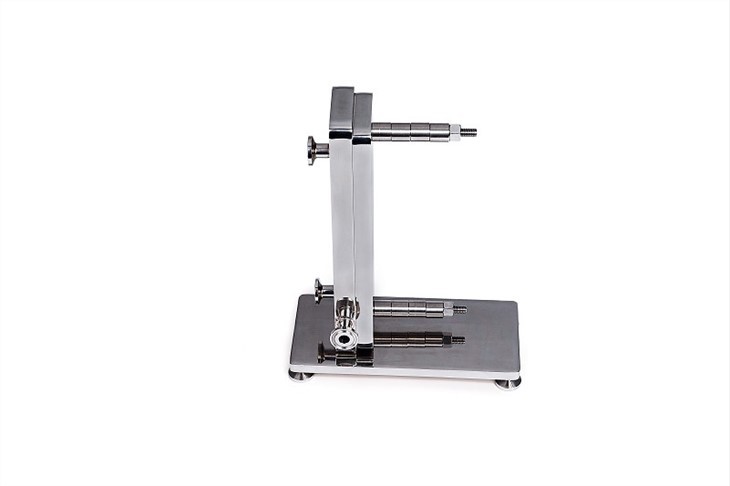
First, material choice. For process-scale applications, plastic holders (while cheap upfront) have major flaws. They scratch easily, can leach chemicals during cleaning, warp under high heat or pressure, and don’t last half as long as metal. That’s why we built most of our large cassette holders from 316L stainless steel—it’s the gold standard for biopharma and industrial processes because it’s corrosion-resistant, easy to sanitize, and holds up to years of repeated use. Our Process-scale Stainless Steel Holder is a perfect example of this: it’s built to handle 0.5 to 2.5 m² cassettes, has a precision-machined flow path that makes sure every inch of your membrane gets the same flow (no dead zones where product can get stuck or fouling builds up), and has a reinforced frame that prevents bowing even after 100+ CIP cycles. I’ve seen teams use these holders for 5+ years straight, and they still look and perform like new—way better than the plastic ones they tried before.
Wait, but not all large cassettes are the same type. TFF membrane cassettes, for instance, have different port sizes, mounting holes, and membrane configurations than, say, tangential flow filtration cassettes for cell separation or depth filtration cassettes for clarification. That’s why we designed a range that caters to specific large cassette types, too. If you’re working with TFF specifically, our TFF Membrane Cassette Holder is tailored for that: it has adjustable mounting brackets to fit most standard large TFF cassettes, a leak-tight seal that doesn’t rely on flimsy gaskets (we use medical-grade EPDM that’s compatible with all common process fluids), and a modular design that lets you stack up to 4 holders in a single skid if you need even more membrane area without custom work. A few months back, a team at a mid-sized biotech told us this holder cut their cassette changeover time by 40% because they didn’t have to fumble with custom-fit clamps anymore— that’s the kind of real impact we care about.
I know a lot of you might be thinking, “But can’t I just get a custom holder made for my exact cassette size?” Sure, but custom stuff is expensive, has long lead times, and you’re stuck with it even if you switch to a slightly different cassette model later. Our Cassettes Holder line (link here: /stainless-steel-holder/0-5-2-5-stainless-steel-holder/cassettes-holder.html) is designed to be versatile for most large cassette sizes without being a one-off. We’ve tested compatibility with 20+ popular large cassette brands, so you don’t have to worry about measuring every port and mounting hole just to see if it fits. And because it’s standard, lead times are way shorter than custom—usually 2 weeks or less, not 2 months.
But here’s the thing about large cassette holders that most suppliers won’t tell you: it’s not just about holding the cassette. It’s about supporting the entire process around it. If your holder causes uneven flow, you’ll get inconsistent permeate flux, which means your purification yields drop, or you have to spend more time troubleshooting why a batch isn’t working. If it leaks, you’ll waste expensive product (I’m talking $10k+ per batch for some therapeutic proteins) and have to shut down the line for cleaning. That’s why every large holder we make goes through a 12-point quality check—we pressure-test every unit before it leaves our warehouse to make sure there are no leaks, and we document all the specs so you can submit them to regulatory teams without pulling your hair out.
Let’s talk about a real example to make this concrete. Last year, a team at a contract manufacturing organization (CMO) was scaling up a monoclonal antibody (mAb) process from 100L to 500L batches. They were using a benchtop holder for their 1 m² cassettes, and when they scaled up, the cassettes would shift under the higher flow rate, leading to 15% lower recovery every run. They tried 3 different “large-capacity” holders from other suppliers, but all had dead zones or leak issues. They switched to our Process-scale Stainless Steel Holder, and within the first week, their recovery jumped back to their original lab-scale yield of 92%. That’s the difference a good large cassette holder makes—it’s not just a piece of hardware; it’s a part of your process performance.

I get why this question is so common. When you’re in the thick of scaling, you’re dealing with hundreds of small decisions that add up: what filters to use, how to optimize flow rates, how to cut costs without cutting quality. The cassette holder is one of those things that’s easy to overlook until it’s the bottleneck slowing you down. You don’t want to be the team that has to shut down a production run because your cassette holder can’t handle the size of cassette you need.
So to circle back to the original question: yes, there are definitely cassettes holders made specifically for large-sized cassettes. The key is looking for holders that are built for process-scale use—not just scaled-up lab gear, made from durable materials, tailored to your specific cassette type, and tested for real-world process conditions. The good news is, you don’t have to build it yourself or settle for a holder that doesn’t work. Our line of holders is designed exactly for this gap, whether you need a holder for 0.5 m² cassettes or larger, for TFF cassettes or other large membrane units.
If you’re tired of dealing with holders that cause leaks, inconsistent flow, or short lifespans, I’d encourage you to check out our range. We work with teams across biopharma, industrial wastewater treatment, food and beverage processing, and more, so we know what works for different use cases. Our team can help you pick the right holder for your specific cassette size, process, and regulatory needs—no sales jargon, no pushy upsells, just honest advice based on what we’ve seen work for hundreds of other teams.
If you’re ready to stop troubleshooting your cassette holder and get back to focusing on your process goals, reach out to our team to start a conversation about what you need. We’re here to help make your scaling work smoother, not add another headache to your plate.
References:
- Janson, C. A. (2011). Protein Purification: Principles, High-Resolution Methods, and Applications (3rd ed.). Wiley-VCH.
- Langer, R., & Peppas, N. A. (2003). Advances in biomaterials, drug delivery, and bionanotechnology. AIChE Journal, 49(12), 2990–3006.
- Shukla, A. A., & Thömmes, J. (2010). Recent advances in large-scale production of monoclonal antibodies and related proteins. Nature Biotechnology, 28(3), 231–237.
- Process Scale TFF Systems: Design and Operation Guidelines. (2018). Pall Corporation Technical Bulletin.
- Stainless Steel Holders for Bioprocessing: Material Selection and Performance Criteria. (2021). BioPharm International.